
Introduction
Recruiters today face a cruel paradox: application volumes have never been higher, yet finding the right hire feels impossibly difficult. 67% of HR leaders report that AI-generated applications have slowed their hiring process, with 20% citing delays exceeding two weeks. Meanwhile, time-to-fill has surged 24% from 33 days in 2021 to 44 days in 2025, even as recruiter workloads have climbed.
The gap between volume and quality keeps widening. Recruiters are dealing with:
- Passive talent that never applies through traditional channels
- Inbound pipelines flooded with AI-enhanced resumes that obscure real candidates
- Shrinking budgets against rising stakeholder expectations
- Fragmented tool stacks requiring manual updates across multiple systems
This guide breaks down the four biggest recruiting challenges right now — and offers concrete solutions for each.
TLDR
- 70% of the workforce is passive talent — they won't apply to job posts, making inbound-only recruiting structurally flawed
- Manual sourcing and slow screening drain recruiter time; teams now conduct an average of 20 interviews per hire, a 42% increase since 2021
- Misalignment between recruiters and hiring managers creates costly rework and late-stage rejections
- 91% of recruiters have spotted candidate deception — AI-generated profiles are polluting inbound pipelines and wasting screening time
- Outbound search across verified candidate databases lets lean teams hire faster without increasing headcount or budget
Why Recruiting Feels Harder Than Ever
The recruiting environment has fundamentally shifted. More stakeholders, longer interview processes, higher candidate expectations, and new technology have transformed what was once straightforward into a complex, multi-stage operation.
The numbers tell the story: average U.S. time-to-fill now sits at 44 days, a 24% increase from just four years ago. Recruiters now manage an average of 14 open requisitions simultaneously, a 56% jump from 2022, while teams conduct 20 interviews per hire compared to 14 in 2021.
Those numbers reflect a deeper problem. The challenge is no longer just candidate volume — quality, speed, verification, and team alignment must all be optimized at once. Recruiters who succeed focus on root causes rather than generic fixes.
AI-assisted job applications have added a new dimension: candidates can mass-apply with AI-generated content, making it harder to distinguish genuine interest from automated noise. 65% of hiring managers say the surge in AI-enhanced applications has made it harder to verify candidate skills, forcing teams to spend more time reviewing applications and conducting additional interviews.
Challenge 1: Finding and Reaching Qualified Candidates
The Passive Candidate Problem
The majority of the best candidates are not actively applying to job posts. 70% of the global workforce consists of passive talent—employed professionals who are only open to the right opportunity if approached directly. Some recent data suggests this figure may be even higher, with 73% of professionals now considered passive candidates.
Over-reliance on inbound applications puts recruiters at the mercy of whoever scrolls past a job post. This approach is especially damaging for niche, technical, or senior roles with smaller talent pools. While hundreds of unqualified applicants flood your pipeline, the candidates you actually need never see your posting.
The solution: Shift to an outbound-first recruiting strategy. Instead of waiting for applicants, search verified candidate databases, identify profiles matching specific competencies, and reach out directly.
Obra Hire gives teams access to 800M+ verified candidate profiles they can search and contact without waiting on inbound applications. Recruiters can preview candidate pool size before spending any credits, eliminating risk before commitment.
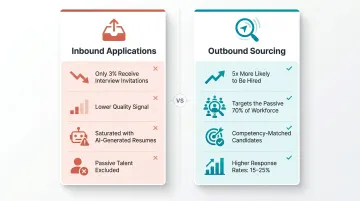
Sourced candidates are 5x more likely to be hired than inbound applicants, while only 3% of inbound applicants receive interview invitations. Outbound sourcing solves the volume problem — but getting passive candidates to actually respond is a separate challenge entirely.
Cutting Through the Noise
Even when sourcers reach passive candidates, standing out remains a challenge— when dozens of other recruiters are contacting the same people. Generic outreach gets ignored. Personalized, role-relevant messaging based on actual competency matching converts.
The fix is competency-based matching: identify candidates who are a genuine fit first, then craft outreach that speaks directly to why their background is relevant. Well-targeted, personalized outreach to passive candidates generates 15-25% response rates, with top-performing messages achieving 18.4% positive response rates.
Competency-based platforms use structured data to evaluate how well candidates match role requirements, going beyond keyword frequency to assess actual skills and experience levels. This lifts response rates and cuts time wasted on poor-fit candidates.
Challenge 2: Time Drain, Screening Overload, and Process Inefficiency
Manual Sourcing and Resume Screening
Manual sourcing—scrolling through LinkedIn, exporting lists, reviewing hundreds of resumes one by one—consumes time that could go toward engaging candidates or partnering with hiring managers. 40% of a recruiter's working week is spent on administrative tasks that technology should handle automatically.
That overhead adds up fast. Recruiters spend 13 hours per week on manual sourcing activities alone—nearly a third of a standard workweek.
The solution: AI-powered sourcing and candidate screening tools automatically surface profiles matching role requirements, reducing manual search needs. These tools let recruiters focus on the highest-fit candidates rather than reviewing low-fit profiles.
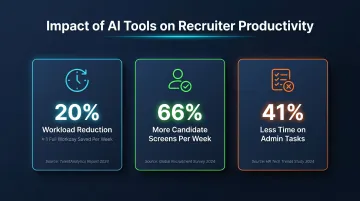
Talent acquisition professionals using generative AI report a 20% reduction in workload—roughly one full workday reclaimed each week. Teams using AI tools also complete 66% more candidate screens per week and spend 41% less time on admin tasks.
Slow sourcing delays every downstream step—time-to-hire climbs, candidates accept competing offers, and hiring managers lose confidence in the process. Top candidates are off the market within 10 days, so speed isn't optional.
Coordinating Teams and Collecting Feedback
Recruiter time is also lost to coordination overhead:
- Chasing hiring managers for feedback
- Re-explaining role requirements
- Aligning interviewers on evaluation criteria
- Managing scheduling across multiple stakeholders
Interview scheduling alone consumes 38% of total recruiter time, and this doesn't account for the hours spent waiting for interview feedback that never arrives on time.
Structured processes cut through that friction. Standardize intake meetings, agree on scorecards before sourcing begins, and set explicit SLAs for interviewer feedback. This eliminates most of the back-and-forth that stalls hiring.
Delayed feedback has costly downstream impacts. One-third of candidates abandon hiring processes they consider too slow, while 49% say application processes are too long or complicated. Candidates left waiting are more likely to accept other offers or disengage, turning a process delay into a lost hire.
Challenge 3: Hiring Manager Misalignment and Candidate Experience
One of the most cited recruiter frustrations is misalignment with hiring managers—unclear role requirements, constantly shifting "must-have" criteria, and late-stage rejections that restart the search. The gap is wider than most expect: 80% of recruiters believe they understand the jobs they recruit for, while 61% of hiring managers disagree.
Research shows the recruiter-hiring manager relationship is 4x more important than any other factor in successful hiring. That misalignment doesn't just slow searches—it wastes sourcing effort, damages team credibility, and burns candidate goodwill.
Conduct a structured intake meeting before any sourcing begins. Define must-have vs. nice-to-have skills, the specific outcomes the role must deliver, and how candidates will be evaluated. Document this brief and share it with every interview stakeholder—this single step eliminates most wasted cycles.
Key elements of an effective intake meeting:
- Specific competencies required (not just job titles)
- Clear distinction between requirements and preferences
- Agreed-upon evaluation criteria and scorecards
- Timeline expectations and interview stage definitions
- Salary range and offer approval process
Recruiter job posts were 54x more likely in 2024 to list "relationship development" as a required skill, reflecting how critical this partnership has become as AI automates administrative tasks. That same relationship dynamic extends to candidates. Recruiters who leave applicants in the dark—no updates, unclear timelines, inconsistent messaging—lose strong candidates to competitors who simply communicate better.
36% of candidates have declined a job offer due to a negative hiring experience, while 61% of job seekers report being ghosted after an interview.
Fixing this requires consistency, not heroics:
- Set clear process timelines upfront
- Send status updates even when there is no decision yet
- Provide brief feedback even to rejected candidates when possible
- Communicate consistently across all interview stakeholders
34% of candidates assume they've been ghosted after only 7 days of silence. Regular communication prevents drop-off and preserves your employer brand.
Challenge 4: Fake Applicants, Budget Pressure, and Broken Tool Stacks
Fake and AI-Generated Applicants
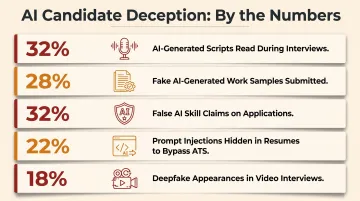
Fake applicant profiles have become a serious pipeline problem. Candidates now apply with AI-written resumes at massive scale, flooding inbound queues with unqualified or fraudulent submissions. 91% of recruiters have spotted candidate deception, with 65% of hiring managers catching applicants using AI deceptively.
Specific fraud tactics observed:
- 32% caught applicants reading from AI-generated scripts during interviews
- 22% caught prompt injections (hidden text) in resumes designed to bypass ATS filters
- 18% caught applicants showing up as deepfakes in video interviews
- 28% of job seekers admit to using AI to generate fake work samples
- 32% have claimed AI skills they do not actually possess
34% of recruiters now spend up to half their work week filtering spam and junk applications.
The fix is to move upstream: use verification-first sourcing tools that filter out fake profiles before recruiters spend time screening them. Obra Hire's verified profile filtering prioritizes authenticated candidates, cutting exposure to AI-generated applications before they reach your queue.
Budget Pressure
Fake applicants aren't the only drain on recruiting resources — budgets are tightening at the same time. Cost-per-hire has risen to $5,475 for non-executive roles and $35,879 for executive hires, while 46% of HR leaders in North America expect flat or decreased recruiting budgets in 2025.
Audit where budget is going and prioritize tools with self-serve or freemium models over expensive flat-fee platforms. Obra Hire, for instance, starts at $0/month and scales to $169/month — a significant shift from LinkedIn Recruiter's $8,999 annual seat license — while giving teams direct outbound access to candidates rather than waiting on inbound volume.
Tool Fragmentation
Disconnected tools create a third layer of inefficiency. The average enterprise talent acquisition team uses between 7 and 12 separate tools to manage a single hiring process. When sourcing, ATS, scheduling, and communication platforms don't connect, recruiters manually re-enter data across systems — and it takes an average of 23 minutes to fully regain focus after each context switch.
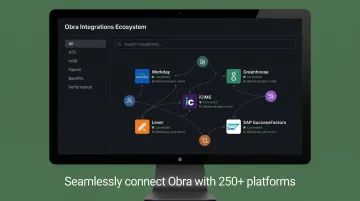
Prioritize platforms with native ATS/HRIS integrations so hiring data flows automatically. Obra Hire connects with 85+ systems — including Workday, Greenhouse, iCIMS, Lever, and SAP SuccessFactors — so candidate data transfers without manual re-entry or disrupting existing workflows.
Frequently Asked Questions
What is the biggest challenge faced by recruiters?
Finding and reaching qualified candidates is the top challenge, especially in competitive markets where passive candidates outnumber active job seekers. Since roughly 70% of the workforce won't respond to job posts, sourcing quality over volume is what separates effective recruiters from the rest.
What is the 70/30 rule in hiring?
The 70/30 rule states that approximately 70% of the workforce consists of passive candidates who are not actively job hunting, while only 30% are actively applying. This ratio means recruiters who only rely on inbound applications compete for a small, highly contested pool of talent.
What are the 4 P's of recruitment?
The 4 P's of recruitment are People (finding the right candidates), Process (structured hiring workflows), Proposition (the employer value proposition that attracts talent), and Pipeline (maintaining a steady flow of qualified candidates ahead of need).
What are the 4 R's for recruitment?
The 4 R's framework includes Reach (expanding sourcing channels), Relevance (matching candidates to roles effectively), Relationships (building candidate and hiring manager trust), and Retention (ensuring new hires stay).
How can recruiters reduce time-to-hire without sacrificing candidate quality?
Outbound sourcing, structured intake meetings, pre-agreed scorecards, and task automation all shorten time-to-hire without cutting corners on quality. AI-powered tools can further reduce workload by 20% while improving candidate matching accuracy.