Introduction
Tech hiring has never been harder to get right. Inbound application volumes are up — but quality isn't. According to research on AI recruiting trends, 70% of job seekers now use generative AI in their job search, and nearly half are using it to write resumes and cover letters. Some startups are receiving close to 3,000 applications per opening, yet the actual pool of candidates with verified, in-demand skills remains narrow.
The result: hiring teams are drowning in applications that don't represent real candidates. Meanwhile, the people you actually want — passive candidates who aren't actively job hunting — are largely invisible on traditional job boards.
Platform choice has become a strategic decision, not just a procurement one. The wrong tool means longer time-to-fill and a cost-per-hire that keeps climbing. Tech roles already cost $6,000–$12,000+ per hire, well above the U.S. cross-industry average of ~$4,700.
This guide breaks down the best tech recruitment platforms for 2026 — what each one does well, where it falls short, and which hiring scenarios it actually fits.
TL;DR
- Tech recruitment platforms in 2026 span AI sourcing tools, assessment platforms, ATS suites, and professional networks — each built for different needs
- Top platforms reach passive candidates, filter AI-generated profile noise, and integrate with your existing workflow
- Evaluate platforms on verified data, competency-based matching, ATS integration, pricing, and scalability
- No single platform wins every use case — the right choice depends on team size, hiring volume, and whether you need sourcing, assessment, or full ATS functionality
- This list covers the top platforms for tech hiring across all three categories
What to Look for in a Tech Recruitment Platform in 2026
The Shift to Outbound Sourcing
The inbound model is broken for tech hiring. When 70% of the global workforce is passive — meaning they're not actively applying anywhere — waiting for applications means competing for the 30% that are, while the best candidates stay invisible.
LinkedIn cold outreach response rates have dropped from over 30% to under 10% in recent years. Volume-based outreach alone no longer works. The right question when evaluating any platform is: how well can it find the right person before they start looking?
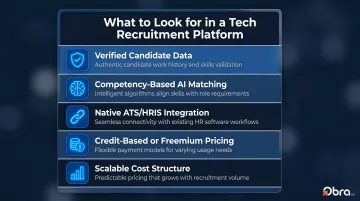
Core Evaluation Criteria
Before buying any platform, assess it across these five dimensions:
- Filters out fake, AI-generated, and ghost profiles — verified candidate data is non-negotiable in 2026
- Matches on what candidates can do, not just resume keywords — competency-based AI outperforms text search
- Connects natively with your ATS/HRIS — confirm integrations before signing, not after
- Uses credit-based or freemium pricing — per-seat and per-post models scale poorly as hiring volume grows
- Grows without cost explosions — flat or pooled pricing structures beat per-recruiter fees at scale
A Note on Cost-Per-Hire
Cost-per-hire is increasingly a board-level metric in tech organizations. With specialized roles running $12,000+ per hire, platforms that charge per recruiter seat can quietly become some of the most expensive line items in your HR budget. Evaluate total cost at your expected hiring volume — not just the monthly subscription rate.
Best Tech Recruitment Platforms for Hiring Top Talent in 2026
These platforms were selected based on:
- Candidate database quality and profile verification
- AI sourcing capability and matching depth
- Integration breadth with existing ATS/HRIS stacks
- Pricing model and cost-per-hire implications
- Fit across outbound sourcing, skills-based evaluation, and enterprise ATS needs
Obra Hire
Obra Hire is a self-serve outbound hiring platform built specifically for the post-AI hiring era. It gives teams direct access to 800M+ candidate profiles through AI-powered, competency-based matching — without waiting on inbound applications or paying per recruiter seat.
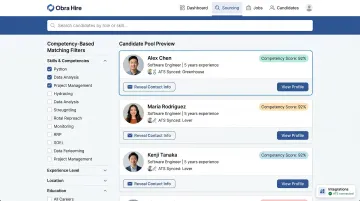
The platform's matching engine distinguishes between "Must Have" and "Nice to Have" criteria, using structured competency data rather than keyword proximity to surface the strongest matches. Before spending any credits, recruiters can preview their candidate pool size and individual profiles — a key differentiator for teams validating search criteria before committing budget.
What sets it apart for tech hiring:
- Outbound-first architecture that proactively surfaces passive candidates
- Verified profile filtering to reduce exposure to fake and AI-generated profiles
- Preview of candidate pool size and profiles before any credits are spent
- Direct contact reveal: email, phone number, LinkedIn profile, and resume
- 85+ ATS/HRIS integrations including Workday, Greenhouse, iCIMS, Lever, and SAP SuccessFactors
- Shared team credits on Scale plan — contacts unlocked by one team member are visible to all
- Freemium model with no contract required
| Detail | Description |
|---|---|
| Best For | Teams of any size seeking outbound access to passive tech candidates at a lower cost-per-hire than traditional platforms |
| Key Features | 800M+ verified profiles, competency-based AI matching, verified profile filtering, unlimited searches, direct contact reveal, 85+ ATS integrations, shared team credits |
| Pricing Model | Freemium: Free ($0/mo, 50 credits), Explore ($109/mo, 500 credits), Scale ($169/mo, 1,200 credits/license), Enterprise (custom) — no contract required |
LinkedIn Recruiter
LinkedIn Recruiter sits on top of the world's largest professional network — 1.3 billion registered users, with over 310 million active monthly. Its AI capabilities have moved well beyond InMail filters: the LinkedIn Hiring Assistant, now globally available as of September 2025, handles sourcing, screening, and follow-up drafting autonomously.
Microsoft CEO Satya Nadella confirmed those agentic products have crossed a $450 million annualized revenue run-rate — production-grade infrastructure, not an experimental add-on.
The platform's primary weakness is cost. Per-seat pricing is not publicly listed, but third-party estimates put Recruiter Corporate at $10,800–$12,960 per seat annually. For teams with one or two dedicated recruiters, that's manageable. For lean hiring teams or startups, it's prohibitive.
The other ongoing challenge: LinkedIn has removed over 121 million fake profiles, but AI-generated profile creation is outpacing removal efforts industry-wide.
| Detail | Description |
|---|---|
| Best For | Large enterprises and staffing agencies with dedicated recruiting budgets seeking passive talent reach and employer brand visibility |
| Key Features | AI Hiring Assistant (agentic), InMail outreach, generative AI messaging, Boolean + skills filters, Microsoft Teams integration |
| Pricing Model | Per recruiter seat, subscription-based (not publicly listed; estimated $10,800–$12,960/seat/year for Corporate tier) |
Indeed Hiring Platform
Indeed is the dominant platform for high-volume tech and IT hiring — officially the #1 worldwide site for job seekers by traffic. Its Smart Screening tool uses AI to score candidates against objective criteria, reducing the number of applications needed to make a hire by 54% and cutting average time-to-hire by 20%, based on Indeed's own data from 1,095 jobs.
The "Pay for Results" model is genuinely differentiated: employers pay only when candidates meet set criteria and attend interviews, not simply for clicks. This works well for mid-level IT, support, and infrastructure roles at volume. Where Indeed underperforms is in senior and specialized tech hiring — the platform's inbound-first model means you're still dependent on the right person finding your posting.
| Detail | Description |
|---|---|
| Best For | Companies hiring at high volume for IT, support, and mid-level tech roles who need funnel automation at scale |
| Key Features | Smart Screening (AI scoring), automated scheduling, Pay for Results model, global candidate reach, Sponsored Jobs |
| Pricing Model | Pay-per-click or Pay for Results; free job posting available with limited visibility; minimum ~$5/day or $150/month for sponsored |
HackerRank
HackerRank is not a sourcing platform — it's a skills intelligence layer that sits on top of your sourcing workflow. Over 3,000 companies use it to evaluate developer capabilities through real-world coding challenges and technical assessments, replacing the resume screen with an actual skill screen.
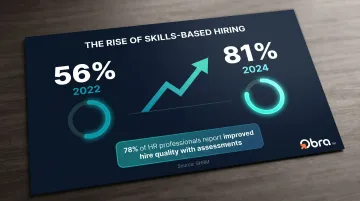
81% of employers now use some form of skills-based hiring, up from 56% in 2022, and SHRM research shows that 78% of HR professionals report improved hire quality when assessments are used. HackerRank is built precisely for this moment — objective, bias-reduced technical evaluation at every stage of the funnel.
Its Pro plan ($375/month) includes AI proctoring, identity verification, and ATS integrations with Workday, Greenhouse, Lever, and Ashby. For engineering teams that have been burned by strong-on-paper candidates who struggle with real code, it directly addresses that gap.
| Detail | Description |
|---|---|
| Best For | Engineering teams that need to objectively validate coding skills and technical competency before advancing candidates to interviews |
| Key Features | Role-based coding assessments, AI proctoring, identity verification, plagiarism detection, 40+ ATS integrations, advanced scorecard assist |
| Pricing Model | Starter: $165/mo (120 attempts/year); Pro: $375/mo (300 attempts/year); Enterprise: custom |
Wellfound (formerly AngelList Talent)
Wellfound rebranded from AngelList Talent in January 2023 and has since become the primary hiring platform for the startup and early-stage tech ecosystem. The platform has connected over 8 million candidates with opportunities at 150,000+ startups, with a candidate pool that specifically opts in to startup culture, equity compensation, and mission-driven work.
That self-selection is the key differentiator. If you're hiring a founding engineer or building out a seed-stage product team, Wellfound puts you in front of candidates who are actively interested in equity and high-growth environments — a pool that's difficult to reach through traditional job boards or recruiter outreach.
The free tier allows unlimited job posting with a built-in ATS. Recruit Pro ($499/month) adds outbound sourcing filters, resume access, and unlimited messaging.
| Detail | Description |
|---|---|
| Best For | Startups and growth-stage tech companies hiring founding engineers, early product teams, or candidates motivated by equity and startup culture |
| Key Features | Startup-focused candidate pool, equity-transparent job postings, direct candidate outreach, built-in ATS, remote-friendly sourcing |
| Pricing Model | Free to post; Promoted Jobs from $200; Recruit Pro $499/mo; Autopilot at custom pricing |
Workday Recruiting
Workday Recruiting is an enterprise-grade talent acquisition suite embedded within Workday's broader HCM ecosystem. It was named a Leader in the 2026 Gartner Magic Quadrant for Talent Acquisition Suites, and over 60% of Fortune 500 companies use Workday for talent acquisition — a figure that reflects deep enterprise adoption, though it says little about fit for mid-market or smaller organizations.
The platform's strongest capability is its integration with everything else Workday manages: skills data, internal mobility, compliance, and workforce planning all feed into the same system. Its Recruiting Agent (powered by HiredScore) and Candidate Experience Agent (powered by Paradox) have collectively scheduled over 30 million interviews, with some organizations reducing frontline time-to-hire to as low as 3.5 days.
The catch: pricing is custom and available only through enterprise sales, and implementation complexity is real. This is a platform for organizations that already run Workday for HR and finance, not a standalone sourcing tool.
| Detail | Description |
|---|---|
| Best For | Large enterprises seeking a unified ATS + HCM system with skills-based internal mobility and external tech hiring in a data-secure environment |
| Key Features | Workday Skills Cloud, agentic AI (Recruiting Agent + Candidate Experience Agent), internal talent identification, compliance controls, HRIS integration |
| Pricing Model | Enterprise custom pricing only (contact Workday sales) |
How We Chose These Platforms
Evaluation Framework
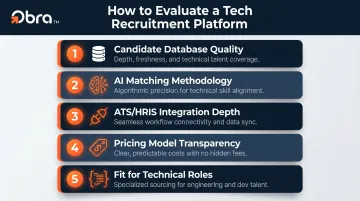
Each platform on this list was assessed across five dimensions:
- Candidate database quality and reach: size, data freshness, and geographic coverage
- AI matching methodology: competency-based vs. keyword-only, and depth of skill mapping
- ATS/HRIS integration depth: native connectors, API support, and workflow compatibility
- Pricing model transparency: total cost at realistic hiring volumes, not just the monthly rate
- Fit for technical roles: whether the platform was purpose-built for tech hiring or adapted from a general model
Common Mistakes Buyers Make
- Choosing based on brand recognition without validating outbound sourcing capability
- Ignoring integration requirements until after purchase — then discovering the platform doesn't connect with their ATS
- Evaluating only the per-seat or per-post rate, not the total cost at scale
- Conflating assessment platforms with sourcing platforms — they solve different problems and work best together, not as substitutes
No single platform wins across every use case. The right choice comes down to your actual bottleneck: finding candidates, qualifying them, or managing the full hiring workflow. That answer looks different for a three-person startup than for a Fortune 500 HR team.
Conclusion
The best tech recruitment platform in 2026 is the one that fits how your team actually works — not the one with the highest brand recognition or the most feature bullets on a pricing page.
The right fit depends on what you're actually trying to solve:
- Verifying real skills from inflated resumes → HackerRank belongs in the stack
- Recruiting founding engineers who care about equity and mission → Wellfound is the right starting point
- Running Workday across HR and finance → Workday Recruiting's integration advantage is hard to replicate
- Accessing passive candidates without costs that spiral → LinkedIn Recruiter and outbound tools like Obra Hire serve different budget realities
Before signing any contract, prioritize platforms that offer trial access or freemium entry points. Validate candidate pool size, integration fit, and anti-fraud measures before committing budget. A week of upfront evaluation is almost always cheaper than switching platforms mid-hire cycle.
If inbound-dependent tools aren't delivering, Obra Hire is a free starting point: unlimited searches, verified candidate profiles, and no contract required.
Frequently Asked Questions
What are the best platforms for hiring tech talent in 2026?
The strongest options by use case: LinkedIn Recruiter for passive talent reach at scale, Indeed for high-volume IT and support roles, Workday for enterprise ATS needs, HackerRank for validating engineering skills, and Obra Hire for outbound sourcing of passive candidates at a lower cost-per-hire than traditional platforms.
What are recruiters prioritizing when hiring tech talent in 2026?
Three priorities dominate in 2026:
- Verified skill sets over credentials
- Passive candidate access over inbound application volume
- Tools that filter out AI-generated application noise
Competency-based matching and time-to-fill have become the metrics most recruiting teams are evaluated against.
What jobs are least likely to be automated by AI?
Roles requiring complex judgment, interpersonal depth, and physical dexterity remain most resistant to automation: senior engineering leadership, UX research, hands-on DevOps/SRE, and security architecture. AI will augment these roles rather than replace them. The World Economic Forum projects net job creation in tech-adjacent fields through the end of the decade.
What's the difference between inbound and outbound recruiting platforms?
Inbound platforms (job boards, traditional ATS) wait for candidates to apply. Outbound platforms proactively surface and contact passive candidates. Since roughly 70% of the global workforce isn't actively job-seeking at any given time, outbound approaches consistently yield higher-quality tech hires — especially for specialized and senior roles.
How do I know if a tech recruitment platform is worth the cost?
Evaluate cost-per-hire impact, not just the monthly subscription rate. Before committing, confirm the platform shows candidate pool size upfront, verify ATS/HRIS compatibility, and model total cost at your actual hiring volume rather than a single seat or posting price.
Can small teams and startups use enterprise recruitment platforms effectively?
Most enterprise platforms — Workday, LinkedIn Recruiter Corporate — are cost-prohibitive for lean teams. Freemium and credit-based platforms with no seat-based pricing are more practical for startups and small HR teams managing occasional technical hires, allowing spend to scale with actual hiring activity rather than headcount.