According to LinkedIn's Global Talent Trends research, **70% of the global workforce consists of passive talent** — people who aren't browsing job boards but may be open to the right opportunity. Meanwhile, inbound pipelines are increasingly flooded with AI-generated applications that waste recruiter time without improving hire quality.
The difference between companies that consistently hire well and those that scramble isn't budget — it's having a deliberate strategy. This article covers 10 proven recruitment strategies, from employer branding and skills-based hiring to outbound sourcing and data-driven optimization, that help organizations of any size hire better, faster.
TL;DR
- Top candidates aren't waiting in your inbox — outbound sourcing is now the baseline, not a bonus
- A strong employer brand and honest EVP determine whether top candidates even consider you
- Skills-based hiring and structured interviews outperform credential-first screening for long-term fit
- Referral programs, talent pipelines, and internal mobility reduce cost-per-hire without sacrificing quality
- AI-powered tools and hiring metrics are now standard equipment for high-performing recruiting teams
What Makes a Recruitment Strategy Effective?
A recruitment strategy is a repeatable system for attracting, evaluating, and securing the right candidates — instead of reactive, role-by-role improvisation. With a clear strategy in place, hiring becomes a predictable process rather than a scramble every time a seat opens up.
The business case is straightforward. SHRM reports that a bad hire can cost up to $240,000 when you factor in lost productivity, recruiting expenses, and damaged relationships. Unfilled roles aren't free either — each open position costs companies an average of $4,129 over a 42-day vacancy period, and that number climbs fast for revenue-generating roles. A strong strategy directly addresses both risks:
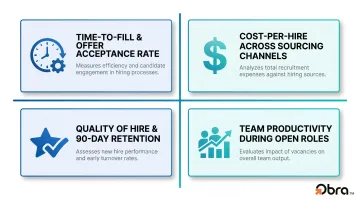
A strong recruitment strategy directly impacts:
- Time-to-fill and offer acceptance rates
- Cost-per-hire across sourcing channels
- Quality of hire and 90-day retention
- Team productivity during open role periods
The 10 strategies below cover the highest-impact methods used by competitive hiring teams today — ranging from foundational to advanced. Most effective teams run several of them in parallel.
Top 10 Recruitment Strategies to Hire the Best Talent
No single strategy wins every role. The right mix depends on your company size, industry, and hiring volume. That said, the strategies below are the ones that consistently move the needle across organizations of all types.
1. Build a Strong Employer Brand and Employee Value Proposition (EVP)
Employer branding is the foundation everything else rests on. Before a candidate applies, before they even read your job description, they've already formed an opinion about your company — based on Glassdoor reviews, LinkedIn posts, and what people in their network say.
75% of job seekers research a company's reputation before applying. Companies with a strong employer brand see up to 50% lower cost-per-hire and 28% lower turnover. That's not a marketing outcome — it's a financial one.
Your EVP should reflect what the actual employee experience looks like, not what you wish it looked like. Candidates today evaluate:
- Compensation and flexibility
- Career growth and development opportunities
- Mission alignment and team culture
- Manager quality and leadership visibility
Here's the problem: Gartner found that only 33% of employees say their organization consistently delivers on its EVP promises. Candidates can detect overpromising quickly, especially when employee reviews contradict your careers page.
Activate your employer brand through every touchpoint — careers page, job descriptions, social profiles, and Glassdoor. Your current employees are your most credible advocates. Employee testimonials, behind-the-scenes content, and real team stories outperform generic taglines every time.
2. Write Job Descriptions That Attract the Right People
A job description is often the first and only filter between your role and hundreds of irrelevant applicants. Most are written to describe a role, not to attract a specific person — and that's where quality breaks down.
What an effective job description includes:
- Clear, specific responsibilities (not vague duty lists)
- Required vs. preferred skills (don't conflate the two)
- Compensation range — always
- Brief cultural context that helps candidates self-select
What to cut:
- Inflated requirements ("10 years of experience in a 5-year-old technology")
- Credential barriers that don't reflect actual job needs
- Corporate jargon that obscures what the role actually involves
The salary transparency data is unambiguous. Job postings that include compensation receive 49% more apply starts on average than those without. Listings with employer-provided salaries get 5.1x more impressions per job, according to Indeed. Yet many hiring teams still omit this information, citing internal politics — and pay for it in application volume and quality.
3. Shift to Outbound, Proactive Candidate Sourcing
Inbound recruiting has a structural flaw: the best candidates aren't applying. If 70% of the workforce is passive talent, posting a job and waiting is a strategy that excludes most of the people you actually want.
Outbound recruiting means directly identifying and contacting qualified candidates rather than waiting for them to find you. You define who you're looking for, reach out directly, and control the quality of your candidate pool from the start.
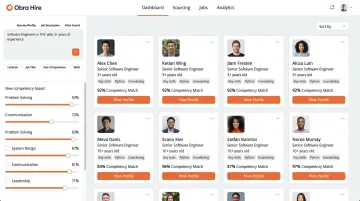
This is where tools like Obra Hire change the math. The platform gives hiring teams direct access to 800M+ candidate profiles searchable by skills, competencies, and experience — not just keywords.
Recruiters can preview the size and quality of their candidate pool before spending any credits, then reach candidates directly via email, phone, or LinkedIn — no waiting for an application to come in.
The practical advantages of outbound sourcing:
- Reaches passive candidates who will never see your job post
- Dramatically reduces time-to-fill by eliminating wait time
- Verified profile filtering eliminates AI-generated and fake applicants flooding inbound pipelines
- Obra Hire's 85+ ATS integrations (including Workday, Greenhouse, and iCIMS) means no disruption to existing workflows
For teams currently paying headhunter fees or expensive recruiter platform seats, self-serve outbound sourcing tools represent a meaningful cost reduction without sacrificing reach.
4. Launch an Employee Referral Program
Referral hires consistently outperform every other sourcing channel — not because the process is better, but because the signal quality is higher from the start.
Referred candidates arrive with a trusted insider vouching for their fit. They have realistic expectations about the role. They onboard faster. The data backs this up: employee referrals account for only 2% of applicants but 11% of hires, making referred candidates roughly 10 times more likely to be hired than job board applicants, according to StaffingHub's recruiting metrics analysis.
What a well-structured referral program looks like:
- Clear, meaningful incentives (cash bonuses, extra PTO, public recognition)
- A simple, frictionless submission process — not a buried form in the intranet
- Regular status updates to referring employees throughout the process
That last point kills more referral programs than any other. When employees submit a referral and hear nothing for weeks, they stop participating. Transparency on referral status directly impacts long-term program engagement.
5. Post Strategically: Niche Job Boards and Targeted Social Media
Relying solely on LinkedIn and Indeed gives you volume. It doesn't give you signal. High-volume general boards attract a wide range of applicants, most of whom won't be a fit — creating screening overhead without improving quality.
Niche job boards work differently. Candidates on industry-specific platforms have self-selected into a professional community, meaning their presence alone is a qualification signal.
Niche job board examples by industry:
| Industry | Board Examples |
|---|---|
| Technology | Dice, Stack Overflow |
| Healthcare | Health eCareers |
| Finance | eFinancialCareers |
| Construction | iHireConstruction |
| Food & Beverage | CareersInFood.com |
On the social side, sponsored posts on LinkedIn and Facebook allow precision targeting by role type, experience level, location, and interests — going beyond organic reach. Organic content (team updates, employee spotlights, culture posts) builds long-term credibility. Paid ads drive immediate reach for active roles. Both serve different functions and work better together.
6. Implement Skills-Based Hiring
The shift from credentials-first to skills-first hiring is one of the most major changes in recruiting over the past five years — and the data confirms it's accelerating. 85% of employers now use skills-based hiring, up from 81% the prior year, with 76% using skills tests to validate candidates, according to TestGorilla's State of Skills-Based Hiring 2025 report.
The reason is practical: degree requirements eliminate qualified candidates who could do the job. 1 in 4 employers said they planned to remove bachelor's degree requirements for some roles by the end of 2025.
Practical implementation methods:
- Pre-employment assessments and work sample tests
- Structured competency-based interviews
- Defined skills taxonomies with proficiency levels
- Sourcing platforms that filter by competency, not just job title
Obra Hire's competency-based search takes skills-based hiring upstream — into the sourcing stage itself. Instead of screening resumes for skills after the fact, teams can search for passive candidates by specific competencies before reaching out, using structured matching rather than keyword scanning. Must-have criteria control who enters the candidate pool; nice-to-haves rank and sort results.
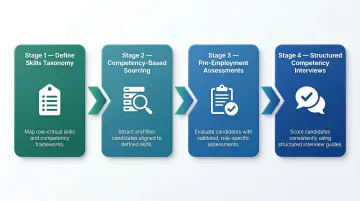
This turns skills-based hiring from a post-application screening tool into a proactive sourcing strategy.
7. Build and Maintain a Talent Pipeline
A talent pipeline is a pre-identified pool of candidates for roles you expect to fill — including strong past applicants, passive candidates you've engaged previously, sourced profiles, and event contacts. Companies with active pipelines don't start from zero when a role opens. That alone is worth the effort.
The average time to fill a position sits around 36 days. Most of that time is spent at the top of the funnel — sourcing, screening, identifying. A pipeline compresses that phase significantly.
How to keep a pipeline warm:
- Tag candidates by role category in your ATS
- Send periodic touchpoints — company updates, relevant news, personalized check-ins
- Re-engage strong past applicants with a specific, personalized message (not a mass email)
- Use platform tools like Obra Hire's shared project pipelines to track candidate status team-wide
The key is maintenance. A pipeline that isn't actively tended goes cold within a few months. Regular, light-touch outreach — even a quarterly update — keeps candidates engaged and ready to respond when a role opens.
8. Partner with Universities and Run Internship Programs
Campus partnerships create a steady pipeline of early-career talent — and, more importantly, they let you evaluate candidates over an extended period before making a hire. By the time you extend a full-time offer to a strong intern, you've already assessed their work quality, cultural fit, and growth potential.
The conversion numbers are compelling. The average intern-to-full-time conversion rate hit 63.1% for 2024-25 interns — the highest mark recorded in five years — with an offer acceptance rate of 88.3%, according to NACE.
Tactics that work:
- On-campus recruiting events and career fair presence
- Relationships with career centers and relevant faculty
- Sponsoring competitions or academic projects in your field
- Structured intern-to-hire programs with clear evaluation criteria
The cost is modest compared to traditional hiring. Average intern hourly rates run around $23.35. Compared to the cost and risk of an external hire for an entry-level role, the economics are difficult to argue against.
9. Prioritize Internal Mobility and Promotions
One of the most underused recruitment strategies is looking inward first. Internal candidates already understand the culture, the systems, and the people. They're faster to onboard, lower risk, and — critically — more likely to stay.
LinkedIn's research shows that employees who make internal moves are 40% more likely to stay at the company for at least three years. Companies that prioritize internal mobility see 53% longer employee tenures overall. Yet only 33% of organizations have formal internal mobility programs, and just 1 in 5 employees feels confident they could make an internal move.
How to build an internal mobility culture:
- Post open roles internally before going external
- Make career paths visible — employees shouldn't have to guess what's possible
- Create cross-functional project opportunities that build transferable skills
- Include career development conversations in regular manager check-ins
When employees see a future inside the organization, they stop looking outside of it — which means internal mobility pulls double duty as both a hiring strategy and a retention lever.
10. Use Data and AI to Continuously Optimize Your Hiring Process
Most recruiting teams track activity — applications received, interviews scheduled, offers extended. Far fewer track outcomes: which sourcing channels produce the best hires, which roles have chronic time-to-fill problems, which interviewers predict retention.
Data-driven recruiting means closing that gap.
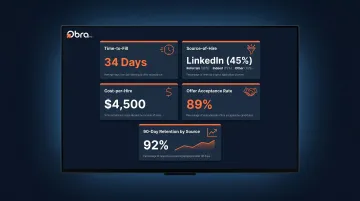
Core metrics every hiring team should track:
- Time-to-fill by role and department
- Source-of-hire (which channels produce actual hires, not just applicants)
- Cost-per-hire across sourcing methods
- Offer acceptance rate
- 90-day retention by source and hiring manager
On the AI side, adoption has nearly doubled in one year — 43% of organizations used AI for HR and recruiting in 2025, up from 26% in 2024. AI recruiting tools can cut time-to-hire by up to 70% by automating sourcing, screening, and scheduling tasks that previously consumed recruiter hours.
Obra Hire's AI-powered search exemplifies this shift. Recruiters describe their ideal candidate in natural language or paste a job description, and the platform surfaces ranked, competency-matched results from 800M+ profiles — no manual database combing required. The Scale plan adds user activity insights and team-wide pipeline visibility, giving recruiting leads a clearer view of what's working.
The teams seeing the biggest gains aren't the ones using the most AI — they're the ones using it to eliminate low-value tasks so recruiters can spend more time on the conversations that actually close candidates.
How to Evaluate Which Recruitment Strategies Are Right for Your Organization
No two hiring teams should use the same combination of strategies. The right mix depends on hiring volume, role complexity, industry, and available resources.
A practical evaluation framework:
- Audit your best hires — where did they come from? Referrals, outbound sourcing, campus programs? Invest more in the channels that consistently deliver.
- Identify your bottleneck — is the problem sourcing (not enough qualified candidates), screening (too many unqualified ones), or conversion (losing candidates late in the process)?
- Match strategies to gaps — if sourcing is the bottleneck, prioritize outbound tools and pipeline building. If screening is the issue, focus on skills-based hiring and structured interviews.
Once you've mapped your gaps, resist the urge to add channels before retiring ones that aren't performing. Spreading resources across six sourcing channels dilutes quality on all of them. Pick 3–5 strategies that fit your stage and budget — then optimize before you expand.
The right strategies also shift as your team grows:
- Small and mid-size teams: outbound sourcing tools, referral programs, and pipeline building deliver the best ROI with limited resources
- Larger teams: layer in campus programs, employer branding campaigns, and recruiting analytics once the foundational channels are optimized
Conclusion
The best hiring teams aren't lucky — they're systematic. A process built for today's market, not the one from five years ago, is what separates consistent hiring from constant scrambling.
The 10 strategies covered here give any hiring team a complete toolkit, whether the priority is faster time-to-fill, lower cost-per-hire, or stronger long-term retention. You don't need to implement all of them at once. Start with the strategy that addresses your most pressing bottleneck and build from there.
Inbound pipelines are flooded with AI-generated applications, and passive candidates aren't browsing job boards. The teams that consistently hire well are the ones actively going out to find talent — not waiting for it to show up.
For teams ready to start with outbound sourcing, Obra Hire offers a free, no-contract plan with access to 800M+ verified candidate profiles, competency-based search, and 85+ ATS integrations — so you can start finding the right people today.
Frequently Asked Questions
How do you recruit top talent?
Recruiting top talent requires proactive outbound sourcing, a compelling employer brand, and a structured evaluation process. The best candidates are rarely actively applying — they need to be identified and engaged directly through sourcing tools, referral networks, and targeted outreach.
What recruitment strategies do companies use to attract top talent?
The highest-impact strategies include outbound sourcing, skills-based hiring, employee referral programs, a strong EVP, and targeted job advertising. Effective companies combine several of these rather than relying on a single channel.
Why is hiring top talent important?
Top performers drive higher productivity, stronger culture, and measurably better output — and that impact compounds over time. A bad hire, by contrast, costs far more than the recruiting process: lost productivity, team disruption, and a full rehire expense.
How can you speed up the recruitment process?
Pre-built talent pipelines and outbound sourcing tools cut wait time, while structured interviews reduce scheduling back-and-forth. ATS automation for screening and calendar coordination eliminates the remaining delays that drag most hiring processes out.
What are the 5 C's of recruitment?
The 5 C's are Competency, Character, Communication, Culture fit, and Compensation. Each represents a dimension of candidate evaluation that predicts long-term success beyond technical qualifications — and structured hiring processes are designed to assess all five.
What is the average cost of a headhunter?
Contingency recruiters typically charge 15–25% of the placed candidate's first-year base salary, while retained executive search firms charge 30–35% of total compensation. For a $200,000 role, that's a $40,000+ placement fee, making self-serve outbound sourcing platforms a far more cost-effective option for most roles.