Introduction
If you've applied to dozens of jobs on Indeed and heard nothing back, you're not imagining it. A typical mid-size company now receives 400–600 applications within 72 hours of posting a role. At that volume, even strong candidates disappear into the pile.
The numbers confirm it: Huntr's 2025 Annual Job Search Trends Report, analyzing 1.7 million applications, found Indeed's average response rate sits at just 4.5%. Meanwhile, LinkedIn — where 56.1% of all job applications are submitted — delivers an even lower 3.1% response rate.
Those numbers reflect a deeper shift in how hiring works. AI tools have made mass-applying effortless, flooding employer inboxes and pushing many hiring teams toward outbound sourcing rather than waiting on inbound applicants. Job seekers who rely solely on Indeed risk being overlooked before a recruiter even reads their name.
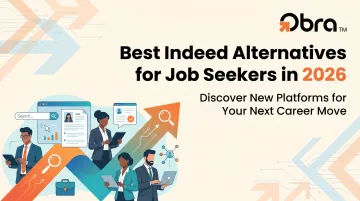
This post covers the best Indeed alternatives, organized by what each platform does best — so you can match them to your career stage and search goals.
TL;DR
- Indeed's 4.5% response rate makes diversifying across platforms essential in 2026
- Google for Jobs leads all platforms at 11.29% response rate — 2.5x higher than Indeed
- LinkedIn, Glassdoor, Wellfound, and ZipRecruiter each serve different job seeker profiles
- Outbound platforms like Obra Hire let employers find you directly, with no application required on your end
- Fewer, targeted applications on the right platforms consistently outperform mass-applying
Why Job Seekers Are Looking Beyond Indeed in 2026
The Competition Problem
Indeed's scale is both its strength and its core limitation. The same reach that makes it attractive to job seekers makes it overwhelming for employers. With hundreds of applications arriving per posting, most resumes never get a human review.
The data backs this up. According to Huntr's 2025 Annual Job Search Trends Report, here's how response rates compare across major platforms:
| Platform | Response Rate |
|---|---|
| Google Jobs | 11.29% |
| Wellfound | 5.95% |
| Glassdoor | 5.46% |
| Indeed | 4.46% |
| 3.10% | |
| ZipRecruiter | 2.82% |
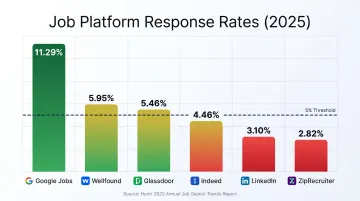
The three highest-volume platforms — LinkedIn, Indeed, and ZipRecruiter — all sit below 5%.
The AI Application Flood
LinkedIn reported a 45.5% surge in job applications submitted in Q3 2024 while job postings actually dropped by 10.6%. That gap is almost entirely explained by AI mass-apply tools. With 86% of job seekers now using AI tools during their search, employers are receiving thousands of low-quality, nearly identical submissions. 33.5% of hiring managers say they can spot an AI-written application in under 20 seconds.
The result: many employers have stopped waiting for inbound applications altogether. Job boards generate 49% of all applications but only 24.6% of actual hires, while proactive outbound sourcing is 5x more likely to result in a hire.
What This Means for You
Exploring alternatives isn't about abandoning Indeed. A smarter approach means:
- Diversifying where your profile appears online
- Targeting platforms with less applicant noise and higher response rates
- Positioning yourself to be found by employers who source candidates directly, rather than waiting for inbound applications
Best Indeed Alternatives for Job Seekers in 2026
Each platform below addresses a specific gap in the job search process — evaluated by response rate, how candidates are discovered, and what makes each one worth your time over Indeed.
LinkedIn Jobs
LinkedIn is the world's largest professional network, where job seekers can both apply to listings and be discovered by recruiters actively sourcing candidates. With 1.3 billion registered members and approximately 820,000 recruiters actively using the platform, visibility here translates directly to opportunity.
The "Open to Work" feature — used by 220 million people — signals availability to recruiters using premium search filters. Beyond job listings, LinkedIn lets you research hiring managers, engage with company content to boost visibility, and build a professional profile that functions as a living resume.
The trade-off: LinkedIn's 3.1% response rate reflects the same high-competition dynamic as Indeed. Premium Career subscribers are 2.6x more likely to get hired and 39% more likely to hear back after applying, which partially offsets that.
| Attribute | Details |
|---|---|
| Best For | Mid-to-senior professional roles, white-collar, and executive hiring |
| Key Features | "Open to Work" signal, InMail from recruiters, profile-based discovery, job alerts, company research tools |
| Pricing | Free basic access; LinkedIn Premium Career at $39.99/month |
Google for Jobs
Google for Jobs is a free aggregator that surfaces listings directly from company career sites, ATS platforms, and job boards inside Google search results. That structural difference matters: candidates often apply through employer ATS systems rather than a crowded job board pool.
Google for Jobs leads all platforms with an 11.29% response rate — roughly 2.5x Indeed's figure. Fewer applicants per listing because the path requires more steps than one-click apply, and many listings haven't yet been picked up by major boards. No account required to use it.
| Attribute | Details |
|---|---|
| Best For | Any job seeker wanting fresh, lower-competition listings from company career pages |
| Key Features | Pulls from company career sites and ATS platforms, salary filters, location-based search, date-posted filters |
| Pricing | Free; no account required |
Glassdoor
Glassdoor layers company reviews, salary data, and culture insights on top of job listings — making it valuable not just for finding jobs but for deciding whether a role is worth pursuing. Candidates who apply through Glassdoor tend to be more intentional, which explains the platform's 5.46% response rate, outperforming both Indeed and LinkedIn.
70% of job seekers now consult reviews before making career decisions. That research translates into better cover letters, sharper interview questions, and less time wasted on roles that aren't a genuine fit.
| Attribute | Details |
|---|---|
| Best For | Job seekers who want to research culture and compensation before applying |
| Key Features | Company reviews and ratings, salary transparency, job listings, CEO approval ratings, employer Q&A |
| Pricing | Free for job seekers |
Wellfound (formerly AngelList Talent)
Wellfound is a startup- and scaleup-focused job marketplace where candidates create profiles and recruiters reach out directly. It's one of the few platforms where companies genuinely apply to candidates rather than the other way around.
Its 5.95% response rate — third-highest of all platforms measured — reflects the lower application volume per role compared to LinkedIn or Indeed. Companies list salary and equity upfront, which acts as a quality filter — candidates who apply are genuinely interested in the compensation on offer. Many early-stage companies hire exclusively on Wellfound before listing elsewhere.
| Attribute | Details |
|---|---|
| Best For | Tech professionals and candidates targeting startup or venture-backed companies |
| Key Features | Profile-based discovery, direct recruiter outreach, transparent compensation, equity details |
| Pricing | Free for job seekers; promoted roles cost employers from $200 |
ZipRecruiter
ZipRecruiter's AI matching platform actively surfaces candidate profiles to relevant employers — meaning a completed profile puts you in both outbound and inbound lanes simultaneously. The "Invite to Apply" feature lets employers reach out to you directly when your profile matches a role, and candidates who receive an invitation are nearly 3x more likely to be hired than those who apply cold.
Its response rate (2.82%) trails the others on this list, but the Invite to Apply mechanism changes the dynamic meaningfully for job seekers who optimize their profile rather than just submitting applications.
| Attribute | Details |
|---|---|
| Best For | Job seekers across industries who want AI-assisted matching alongside traditional applications |
| Key Features | AI job matching, "Invite to Apply" recruiter outreach, one-click apply, job alert notifications |
| Pricing | Free for job seekers |
Obra Hire
Obra Hire operates differently from every platform above. Rather than hosting job listings for candidates to apply to, it's an outbound-first candidate discovery platform used by employers and recruiters to proactively search 800M+ candidate profiles and contact people directly. Job seekers with a profile on Obra Hire can be found and contacted without ever submitting an application.
Instead of competing in a stack of hundreds of resumes, candidates receive direct outreach from employers who've already searched for their specific skills. Obra's SkillsTree taxonomy matches on 8,241+ skills with proficiency levels — not keyword guesses — so employers find the right person with far more precision than a standard job board search.
The platform's verified profile filtering also addresses the AI-generated application problem from the other direction: employers using Obra Hire are specifically trying to reach real, passive candidates rather than sifting through AI-generated submissions.
| Attribute | Details |
|---|---|
| Best For | Passive candidates and professionals open to new opportunities who want employers to come to them |
| Key Features | Outbound employer discovery, verified profile search, competency-based skill matching, direct contact by recruiters, profile visibility controls |
| Pricing | Free to create a profile; no application required from the candidate side |
How to Choose the Right Indeed Alternative
The right platform depends on three things: your career stage, your target industry, and whether you're actively applying or open to being found.
A simple framework:
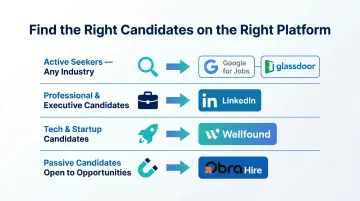
- Active seekers in any industry → Start with Google for Jobs and Glassdoor for higher response rates and research tools
- Professional or executive candidates → Prioritize LinkedIn for recruiter visibility and network leverage
- Tech and startup-focused candidates → Use Wellfound for upfront compensation transparency and lower competition
- Passive candidates or those open to opportunities → Ensure your profile exists on outbound sourcing platforms like Obra Hire, where employers are actively searching
That framework also helps with a related question: how many platforms should you use?
Quality Over Quantity
Spreading across 10+ job boards sounds thorough. It usually isn't. Huntr's Q2 2025 data (1.39 million tracked applications) shows customized applications achieve a 5.75% interview rate versus 2.68% for generic submissions — a 115% improvement. The same principle applies to platforms: two or three well-maintained profiles outperform ten neglected ones.
The Hidden Job Market
A widely cited figure suggests roughly 70% of jobs are never publicly posted — filled instead through referrals, networking, or proactive employer outreach. The exact number is debated, but the pattern is real: a meaningful share of roles are filled before they ever hit a job board. Platforms like Obra Hire flip the dynamic — employers search its candidate database directly, so your profile can surface for roles that never get posted publicly.
Conclusion
No single platform replaces a multi-channel job search in 2026. The most effective approach combines high-response-rate boards like Google for Jobs, professional visibility on LinkedIn, culture research via Glassdoor, and presence on outbound sourcing platforms where employers proactively find candidates.
The common thread across every high-performing strategy: fewer, better-targeted efforts beat mass-applying every time.
That means choosing platforms strategically, not spreading thin across every listing site. One place worth adding to that mix: Obra Jobs lets you create a free profile that puts you in front of employers actively searching for candidates — no applications required. The right job isn't something you chase; it comes to you.
Frequently Asked Questions
What is a better alternative to Indeed?
The best alternative depends on your goal. LinkedIn offers professional visibility and recruiter access; Google for Jobs delivers the highest response rates with less competition; Wellfound is the top choice for startup roles; and Obra Hire lets employers find you through outbound search without requiring you to apply anywhere.
What is the 70/30 rule in hiring?
The 70/30 rule is the widely cited idea that roughly 70% of jobs are filled through referrals, networking, or direct employer outreach — never posted publicly. The exact figure is unverified, but the core point stands: job boards alone leave a large portion of opportunities off the table.
Is Indeed still worth using in 2026?
Yes, but not exclusively. Indeed remains useful for high-volume and entry-level roles, but its 4.5% response rate reflects intense applicant competition. It works best as one part of a broader multi-platform strategy rather than your primary sourcing channel.
Which job board has the highest response rate for job seekers?
According to Huntr's 2025 Annual Job Search Trends Report, Google for Jobs leads all platforms with an 11.29% response rate — approximately 2.5x Indeed's figure. Niche and aggregator platforms consistently outperform high-volume boards because lower application volumes mean employers actually see your resume.
How can a job seeker get found by employers without applying?
Outbound hiring platforms like Obra Hire let employers search and contact candidates directly based on verified skills and experience. A complete profile can generate recruiter outreach without submitting a single application or writing a cover letter.