Introduction
Hiring teams are buried. AI tools now generate polished applications in seconds, keyword-stuffed resumes flood ATS queues, and the result is a painful paradox: more applications than ever, fewer genuinely qualified candidates making it through.
Traditional keyword-based screening wasn't built for this. It filters on resume text — not on what a candidate can actually do. Strong candidates with non-traditional backgrounds get missed. Weak candidates who know the right buzzwords sail through. And passive candidates who never applied in the first place? They don't show up at all.
Skills-based candidate matching addresses all three of these gaps. Instead of matching job titles and degree credentials, these tools evaluate verified competencies against structured role requirements — reducing noise, improving match quality, and actively surfacing candidates outside the inbound application pool.
This post covers the top 5 AI-powered HR tools built for skills-based candidate matching: what makes each one work, who each is built for, and how to choose the right one for your team.
TL;DR
- Skills-based matching evaluates verified competencies — not job titles, degrees, or keyword proximity
- Traditional ATS tools miss strong candidates with non-traditional backgrounds and flood pipelines with poor-fit applicants
- The 5 tools here span outbound AI sourcing, talent intelligence, skills assessments, video screening, and psychometric matching
- Key selection criteria: skills taxonomy depth, ATS integrations, verified profile quality, and bias-mitigation features
- Obra Hire stands out as an outbound-first platform with competency-based matching across 800M+ verified profiles
Why Skills-Based Candidate Matching Is Now an HR Priority
Skills-based candidate matching shifts the evaluation question from "does this resume contain the right keywords?" to "can this person actually do this job?" It maps verified competencies against structured role requirements — and that difference shows up directly in hire quality and retention.
The industry is moving this direction fast. According to HR Dive, nearly half of companies planned to remove bachelor's degree requirements for at least some roles as of 2023. And it's not just optics — Deloitte's research on skills-based organizations finds these companies are more likely to achieve better financial outcomes and adapt faster to change.
Those numbers point to a deeper shift in how hiring actually works. Skills-based matching addresses two structural problems that credential-first hiring simply can't fix.
Two Problems It Actually Solves
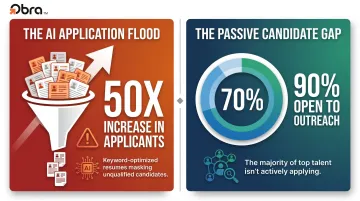
Problem 1: The AI application flood. Resumes are easy to generate and easy to optimize for keyword matching. Hiring managers are increasingly fielding applications that look qualified on paper but aren't. Assessment-first and outbound-first tools break this cycle by evaluating what candidates can do, not what their resume claims.
Problem 2: The passive candidate gap. LinkedIn data shows roughly 70% of the global workforce isn't actively job hunting — but up to 90% are open to the right opportunity when approached. Waiting for inbound applications means structurally missing most of the qualified market. Skills-based outbound sourcing is the only way to reach them.
Top 5 AI-Powered HR Tools for Skills-Based Candidate Matching
These tools were selected based on AI matching depth, candidate data quality, ATS compatibility, and practical fit for teams across different company sizes — not just enterprise tech organizations. Use these criteria to find the right fit for your hiring workflow, budget, and candidate types.
1. Obra Hire
Obra Hire is an AI-powered outbound hiring platform that gives recruiters direct access to 800M+ candidate profiles through competency-based search — instead of waiting for applicants to arrive.
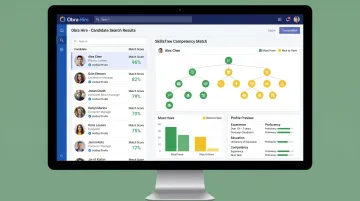
The core differentiator is how it handles matching. Rather than scanning resume text for keyword proximity, Obra Hire uses structured competency data organized into a proprietary taxonomy (SkillsTree) with 8,241 skills and proficiency levels. Search results display a clear "Must Have" vs. "Nice to Have" breakdown so recruiters can see exactly where each candidate fits or falls short.
One practical feature that stands out: recruiters can preview their candidate pool size and browse full profiles — years of experience, work history, education, competency match — before spending a single credit. Credits are only consumed when contact info is revealed (email, phone number, and LinkedIn profile). For teams burned by platforms that charge before you know what you're getting, this matters.
The platform also filters for verified profiles, reducing exposure to AI-generated and fake candidates — a growing problem Gartner projects will affect 1 in 4 profiles by 2028.
| Category | Details |
|---|---|
| Key Features | AI outbound candidate search, competency-based matching, verified profile filtering, 800M+ candidate database, preview before you spend |
| Best For | Hiring teams of all sizes sourcing passive candidates across blue, gray, and white collar roles without expensive recruiter seats |
| Pricing | Free (1,000 profile views + 50 contact credits/month, no credit card); Explore at $109/month (500 credits); Scale at $169/month (1,200 credits + team collaboration); Enterprise custom |
| Integrations | 85+ ATS/HRIS integrations including Workday, Greenhouse, iCIMS, Lever, and SAP SuccessFactors |
2. Eightfold AI
Eightfold AI is an enterprise-grade talent intelligence platform that uses deep learning to infer skills, model career trajectories, and match candidates — internal and external — based on potential rather than job titles.
What separates Eightfold from most tools is its ability to go beyond what candidates explicitly list. The platform infers adjacent competencies from career history, predicts future skill applicability, and surfaces candidates who might not match on a literal keyword search but are strong bets based on trajectory.
It's equally useful for internal mobility — identifying existing employees ready for new roles — as it is for external hiring.
| Category | Details |
|---|---|
| Key Features | Skills inference from career history, internal + external talent matching, diversity and bias controls, workforce planning dashboards |
| Best For | Large enterprises managing skills gaps across a full workforce ecosystem, including internal mobility programs |
| Pricing | Enterprise quote-based; no public pricing listed |
| Integrations | SAP SuccessFactors (documented integration guide available), Workday, and other major HRIS/ATS platforms |
3. TestGorilla
TestGorilla is a pre-hire assessment platform built on one premise: structured, validated skills tests predict job performance better than resumes. With 400+ tests spanning role-specific skills, cognitive reasoning, and behavioral traits, it gives teams an objective, standardized scoring layer at the top of the funnel.
The practical value is consistency. Every candidate completes the same assessment bundle and gets scored against the same criteria — which eliminates the variance that comes from different hiring managers reviewing resumes with different mental filters. TestGorilla also includes anti-cheating controls, which matters when assessing candidates remotely.
| Category | Details |
|---|---|
| Key Features | 400+ validated skills tests, custom assessment builder, anti-cheating controls, ranked candidate results, role benchmarking |
| Best For | Mid-size companies replacing resume screening with objective, skills-first candidate ranking at the top of the funnel |
| Pricing | Free tier available; Core, Plus, and Enterprise paid plans with increasing test access and features |
| Integrations | Greenhouse, Lever, Workable, and other ATS platforms (confirm current connector availability in vendor directory) |
4. HireVue
HireVue combines AI-scored video interviewing with game-based and cognitive assessments, designed specifically for high-volume hiring environments where skills evaluation needs to happen before any recruiter time is spent.
The model flips the typical screening sequence: candidates complete structured video responses and AI-scored assessments first, then recruiters review ranked results. This surfaces high-potential candidates with non-traditional backgrounds who would be filtered out by keyword-based ATS screens — and does it at a scale that's impossible to replicate manually.
Hilton reduced time-to-hire from 42 days to 5 days after deploying HireVue's video and assessment tools — nearly a 90% reduction. An independent audit by Landers Workforce Science LLC also confirmed that HireVue's approach to high-stakes assessments meets or exceeds industry standards.
| Category | Details |
|---|---|
| Key Features | On-demand video interviews, AI-scored structured assessments, game-based cognitive tests, candidate ranking by skill score, bias-mitigation audits |
| Best For | Enterprises and staffing agencies running high-volume hiring who need to scale skills screening without adding recruiter headcount |
| Pricing | Enterprise pricing; plan names published but no public rates listed |
| Integrations | Workday (140+ live customers), SAP SuccessFactors (50+ live customers), Oracle ORC/Taleo (100+ live customers), Greenhouse, iCIMS, SmartRecruiters, and more |
5. Bryq
Rather than running separate assessments for different hiring needs, Bryq combines psychometric evaluation and role-specific skills testing into one — producing a role-fit score mapped against a custom success profile built from the company's own top performers.
The key feature is that one assessment covers multiple hiring decisions. The same Bryq test can be used for external hiring, internal mobility, and reskilling decisions — which matters for HR teams that don't want to manage separate tools for each use case. Bryq also includes educational content and monitoring capabilities around adverse impact, supporting bias-aware hiring practices.
| Category | Details |
|---|---|
| Key Features | Psychometrics + skills assessment in one test, custom role-fit profiles, internal mobility matching, adverse impact monitoring, candidate comparison views |
| Best For | HR teams wanting a single, standardized assessment supporting both external hiring and internal talent development |
| Pricing | Pro plan with transparent annual pricing; Enterprise with custom pricing |
| Integrations | SmartRecruiters, UKG Pro, Pinpoint, Ashby, and other ATS partners (confirm full list directly with vendor) |
How We Chose These 5 Tools
The selection criteria focused on what actually drives better hiring outcomes — not feature volume or brand recognition.
Core Evaluation Criteria
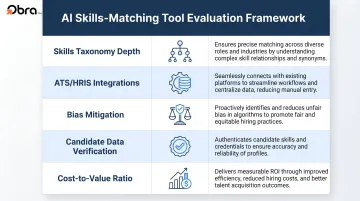
| Criterion | Why It Matters |
|---|---|
| Skills taxonomy depth | Shallow taxonomies produce surface-level matches; proficiency granularity directly affects match accuracy |
| ATS/HRIS integrations | Skills data that lives outside your existing workflow adds friction and gets ignored |
| Bias-mitigation features | EEOC guidance explicitly flags AI selection tools as requiring documented validation and adverse impact monitoring |
| Candidate data verification | AI-generated profiles are flooding job platforms; unverified data degrades match quality at the source |
| Cost-to-value ratio | Per-seat enterprise pricing is increasingly hard to justify when self-serve tools deliver comparable match quality |
The Common Mistake to Avoid
Most HR teams evaluate these tools based on demo quality or integration checklists. Ask a sharper question instead: does this tool match on verified competencies against the actual requirements of this role, or does it pattern-match on text?
A tool with an impressive UI but shallow skills logic will reproduce the same bad-match problems you're trying to solve, wrapped in a new interface.
Conclusion
Skills-based candidate matching isn't a feature you bolt onto an existing hiring process. It reframes the core question: not "who applied?" but "who can actually do this job?"
When evaluating any tool on this list, two things matter most: how deeply the platform understands skills (taxonomy quality and proficiency granularity) and how clean and verified the underlying candidate data is. Everything else — the UI, the dashboards, the AI branding — is secondary.
If your team is ready to move beyond inbound applications and start finding verified, skills-matched candidates proactively, Obra Hire's free plan gives you access to 800M+ profiles with competency-based matching. No contract, no setup, and no credit card needed. Start free at obra.co.
Frequently Asked Questions
What is skills-based candidate matching in AI-powered HR tools?
Skills-based candidate matching evaluates and ranks candidates based on verified competencies and proficiency levels rather than job titles, years of experience, or degree credentials. AI tools automate this by mapping candidate skill profiles against structured role requirements, replacing text-based resume filtering with genuine capability assessment.
How is AI skills matching different from a standard ATS keyword search?
A standard ATS filters resumes by keyword proximity — whether the word "Python" appears somewhere on the page. AI skills-matching tools analyze semantic meaning, infer adjacent competencies, and score candidates against a skills taxonomy, producing fewer false positives and fewer missed high-potential candidates with non-traditional backgrounds.
Can small businesses use AI-powered skills-matching tools, or are they only for large enterprises?
Several tools on this list work well for small teams. Obra Hire's freemium model requires no credit card, no contract, and no setup — making it accessible for any hiring manager. Self-serve platforms without per-seat pricing deliver the most value for smaller teams without dedicated TA resources.
How do these tools handle fake or AI-generated candidate profiles?
Platforms with verified profile databases (like Obra Hire) filter these at the data layer before they reach your search results. Assessment-first tools (like TestGorilla and HireVue) catch unqualified applicants during the evaluation stage regardless of how polished their application looks.
What ATS integrations should I look for in a skills-based hiring tool?
Prioritize tools that integrate with whichever ATS or HRIS you already use — Workday, Greenhouse, Lever, iCIMS, SAP SuccessFactors — so candidate skill data and contact records flow directly into existing workflows. Without those integrations, skills data gets lost to manual re-entry before it ever reaches your hiring managers.
How long does it take to implement an AI-powered skills-matching tool?
Self-serve platforms like Obra Hire require zero setup — new users can search profiles immediately after signing up with a company email. Enterprise platforms like Eightfold AI and HireVue typically involve structured onboarding and ATS integration work that can take several weeks, so running a pilot on a single open role before full rollout keeps the process manageable.