Rather than waiting for candidates to come to you, sourcing means going to find them — particularly the 70% of the global workforce that isn't actively searching for jobs and will never respond to a job posting. This majority of the talent market is invisible to reactive hiring strategies.
This guide covers everything you need to build a proactive sourcing function: what talent sourcing actually is, how it differs from recruiting, the seven-step process, proven strategies across traditional and digital channels, and how to measure whether your sourcing effort is actually working.
TLDR
- Talent sourcing is proactive candidate identification — especially of passive candidates — before a role urgently needs to be filled
- Sourcing builds the pipeline; recruiting converts candidates into hires — two distinct functions that require different tactics
- Effective sourcing follows a repeatable sequence: role profiling, channel selection, candidate search, outreach, tracking, and pipeline nurturing
- The strongest sourcing programs combine referrals, direct outreach, and AI-powered search
- Measure success with time-to-fill, source-of-hire, outreach response rate, and cost-per-hire by channel
What Is Talent Sourcing (and Why It Matters)
Talent sourcing is the proactive process of identifying, researching, and engaging potential candidates — particularly those not actively job searching — to build a pre-qualified talent pool for current and future roles. It happens before formal recruiting begins, feeding the top of the hiring funnel with people worth talking to.
Within the broader talent acquisition lifecycle, sourcing is the discovery phase. Talent acquisition is the overarching strategy; sourcing is how you find people; recruiting is how you evaluate and hire them.
The Passive Candidate Problem
The people most hiring teams want to hire usually aren't applying anywhere — and that gap has real consequences.
According to LinkedIn data cited by SHRM, **70% of the global workforce consists of passive talent** — qualified people who aren't actively job searching and won't respond to job postings. If your hiring strategy depends entirely on inbound applications, you're competing for access to roughly 30% of the available talent market.
The efficiency gap makes this even starker. Research from IQTalent shows that job boards require 74 applications to produce one hire, while direct talent relationships require just 4. That's an 18x difference in screening burden and cost.
Proactive sourcing closes that gap by giving you direct access to the 70% who will never see your job posting — which is why it's become a core function, not an optional add-on, for high-performing recruiting teams.
Talent Sourcing vs. Recruiting: Understanding the Difference
These two functions are frequently conflated, but they operate differently in practice.
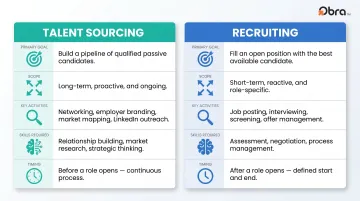
Sourcing is proactive and continuous — a sourcer's job is to build a pipeline of qualified candidates regardless of whether a specific vacancy exists today. The work happens upstream: research, identification, initial engagement.
Recruiting is role-specific and reactive. Recruiters take the pipeline sourcing built and manage evaluation: screening calls, interviews, assessments, offer negotiation, and onboarding.
Side-by-Side Comparison
| Dimension | Talent Sourcing | Recruiting |
|---|---|---|
| Primary goal | Build a qualified talent pipeline | Convert candidates into hires |
| Scope | Broad — ongoing across many roles | Narrow — focused on one open position |
| Key activities | Research, Boolean search, outreach | Screening, interviews, offer management |
| Skills required | Research, personalization, market mapping | Assessment, negotiation, process management |
| Timing | Continuous, even without open roles | Triggered by a vacancy |
In smaller organizations, one person handles both functions. At larger companies and staffing agencies, these split into dedicated roles: a sourcing recruiter finds and engages candidates to build the talent pool, while a full-cycle recruiter owns the selection process through to hire.
SHRM defines sourcing as "the proactive searching for qualified job candidates for current or planned open positions" — the function is about building inventory, not closing requisitions.
The Talent Sourcing Process: 7 Key Steps
Step 1 — Define the Role and Ideal Candidate Profile
Before any search begins, sourcers need to partner with hiring managers to document required skills, experience, and cultural fit criteria. A poorly defined profile wastes everyone's time.
The financial stakes are real: the U.S. Department of Labor estimates a bad hire costs at least 30% of that employee's first-year earnings, and 74% of employers admit to hiring the wrong person for a role.
Go beyond the job description. Build a candidate persona that includes:
- Non-negotiable technical skills vs. trainable skills
- Career stage and trajectory signals
- Industries or company types where ideal candidates typically work
- Indicators of cultural alignment
Step 2 — Identify Sourcing Channels
No single channel works for every role. The right mix depends on seniority, function, and the candidate's likely online presence:
- Tech roles: LinkedIn, GitHub, Stack Overflow
- Creative roles: Behance, Dribbble, LinkedIn
- Healthcare and skilled trades: Niche job boards, professional associations, referrals
- Executive roles: LinkedIn, referrals, alumni networks
- Blue and gray-collar roles: Community boards, trade organizations, referral programs
Platforms like Obra Hire cover blue, gray, and white-collar roles across 34 industries — useful when a team sources across diverse role types rather than just technical positions.
Step 3 — Search and Identify Candidates
With channels defined, the actual search begins. Core techniques include:
- Boolean search strings: combining AND, OR, NOT operators to surface specific profiles on LinkedIn and resume databases
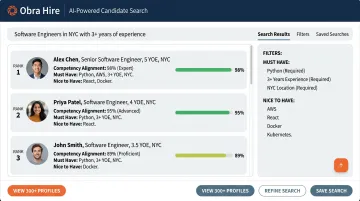
- AI-powered candidate search: describe an ideal candidate in natural language and let the platform surface ranked, competency-matched results
- Verified profile filtering: screens out fake or AI-generated profiles, which Gartner predicts will affect 1 in 4 profiles by 2028
One distinction matters here: active candidates are applying or browsing job boards. Passive candidates are qualified but not looking. They require proactive outreach and won't appear in inbound applicant pools.
Step 4 — Craft and Send Personalized Outreach
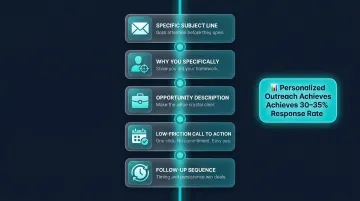
Generic messages get ignored. Personalized messages referencing specific profile details achieve 30–35% response rates versus 8–10% for template outreach — a 3–4x improvement that compounds across hundreds of candidate touches.
Effective outreach includes:
- A subject line referencing something specific (a project, company, skill, or career transition)
- A one-sentence explanation of why you're reaching out to them specifically
- A brief, honest description of the opportunity and why it might interest them
- A clear, low-friction call to action ("Would a 15-minute call next week work?")
- A planned follow-up sequence: one or two messages spaced 5–7 days apart
Step 5 — Track and Manage Candidate Engagement
Log every outreach attempt, response, and status update in an ATS or CRM. Untracked pipelines create duplicate outreach, missed follow-ups, and candidates who fall through the cracks.
Obra Hire supports this with team collaboration and project management features: shared candidate pipelines, collaborator assignments, and outreach status tracking per candidate, with direct integrations into platforms like Workday, Greenhouse, iCIMS, and Lever.
Step 6 — Screen and Qualify Interested Candidates
When candidates respond positively, run a brief pre-qualification conversation before passing them to the recruiter. Check:
- Actual match with must-have criteria
- Realistic interest in the role and location
- Compensation alignment
- Timeline availability
This step protects the recruiter's time and keeps the pipeline quality high.
Step 7 — Maintain and Nurture the Talent Pipeline
A sourced candidate who isn't right today may be perfect for an opening four months from now. Warm pipelines close faster and cost less than restarting the search from zero.
Nurturing tactics:
- Periodic check-ins tied to relevant news ("I saw your company just expanded — thought you might be open to exploring...")
- Sharing relevant content or industry updates
- Revisiting saved candidate lists when new roles open
- Tracking previous outreach history to personalize re-engagement
Proven Talent Sourcing Strategies
Traditional Sourcing Strategies
Employee referral programs consistently outperform every other sourcing channel on quality and cost metrics. Referred candidates are 7x more likely to be hired than job board applicants, move through the pipeline 11% faster, and cost up to 40% less to hire. To maximize a referral program:
- Make submission easy — a simple form, not a bureaucratic process
- Set clear incentives with transparent payout timelines
- Close the loop with referring employees on candidate status
- Remind employees periodically, not just when a role opens
Internal mobility and talent rediscovery often get overlooked. Before sourcing externally, review current employees for promotion or lateral moves — and mine the existing applicant database for previously qualified candidates who weren't hired due to timing, not fit. Both reduce time-to-fill and cost-per-hire with zero sourcing overhead.
When you've exhausted internal options, external channels open up. In-person and virtual events — conferences, career fairs, professional meetups — create direct engagement that no cold message can replicate. To get ROI from events: identify attendees in advance, prepare a concise pitch, and collect contact information with context notes for post-event follow-up within 48 hours.
Digital and AI-Powered Sourcing Strategies
LinkedIn remains the default starting point for professional roles, with over 1.1 billion members worldwide and 87% of recruiters using it to find candidates. Boolean search — combining AND, OR, NOT operators with job titles, skills, and locations — still sharpens results even as AI-powered natural language search grows more capable.
Outbound AI-powered candidate search lets sourcers find qualified candidates without waiting for the right resume to appear. AI platforms search verified databases using competency-based matching — surfacing candidates with the right skills even when their profiles don't include the exact keyword you searched.
Obra Hire takes this approach with access to 800M+ verified candidate profiles and AI-powered competency matching that ranks candidates against structured "Must Have" and "Nice to Have" criteria. Sourcers can preview the full candidate pool before spending any credits — seeing estimated pool size, individual profiles, and competency alignment before committing. That preview step matters when validating whether a search is scoped correctly before outreach begins.
Employer branding works quietly in the background but shapes response rates across every other channel. A strong employer brand reduces cost-per-hire by up to 50% and improves InMail acceptance rates by 31%.
The candidate-side numbers are just as striking: 69% of candidates would refuse a job offer from a company with a poor reputation even if currently unemployed, and candidates trust employees 3x more than the company itself when deciding whether to apply. Proactive outreach lands differently when the candidate has already encountered positive signals — employee testimonials, an active LinkedIn presence, managed Glassdoor reviews.
How to Measure Talent Sourcing Effectiveness
Sourcing without measurement is activity without accountability. These are the metrics that matter:
| Metric | What It Measures | Benchmark |
|---|---|---|
| Time-to-fill | Days from requisition open to accepted offer | 44 days (SHRM, 2025 avg) |
| Source-of-hire | Which channels produce actual hires | Track by volume and quality |
| Outreach response rate | % of messaged candidates who reply | 18–25% (LinkedIn InMail avg) |
| Qualified candidate rate | % of sourced candidates who pass screening | Varies by role and source |
| Cost-per-hire | Total recruiting spend divided by hires | $4,700 avg (SHRM, 2025) |
Using Data to Optimize Channels
Track these metrics by source — not just in aggregate. If a particular job board consistently delivers lower-quality candidates with poor response rates, that's budget worth reallocating toward referrals or direct sourcing.
Build a feedback loop between recruiters and sourcers. When a sourced candidate fails at the interview stage on a specific competency, that insight should update the sourcing criteria for the next search — closing the gap between sourced profiles and what recruiters are really looking for.
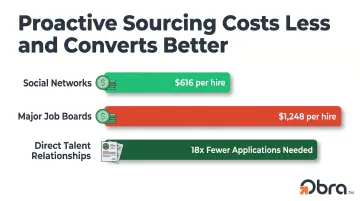
The cost case for proactive sourcing is concrete:
- Social networks average $616 per hire vs. $1,248 for major job boards
- Direct talent relationships require 18x fewer applications to produce a single hire
- Referrals and direct sourcing consistently outperform reactive channels on both quality and cost efficiency
Frequently Asked Questions
What is recruitment sourcing?
Recruitment sourcing is the proactive process of identifying and engaging potential candidates — particularly passive ones not actively applying — to build a qualified talent pipeline before roles are urgently open. It happens before formal recruiting begins, giving teams a head start on qualified candidates.
What are the 7 steps of sourcing?
The seven steps are:
- Define the role and candidate profile
- Identify sourcing channels
- Search and identify candidates
- Craft personalized outreach
- Track candidate engagement
- Screen and qualify interested candidates
- Nurture the pipeline for future roles
What is the difference between a recruiter and a sourcing recruiter?
A sourcing recruiter focuses specifically on finding and engaging candidates to build a talent pool — research, identification, and initial outreach. A general recruiter manages the full hiring process from screening and interviews through offer negotiation and onboarding.
What are the best channels for talent sourcing?
The top channels are LinkedIn, employee referrals, AI-powered candidate search platforms, niche job boards, and industry events. The best mix depends on the role — tech skews toward LinkedIn and GitHub, while trades and healthcare often yield stronger results through referrals and professional associations.
How does AI improve talent sourcing?
AI accelerates sourcing by matching candidates on competencies rather than keywords, filtering out fake or unverified profiles, and enabling natural language searches that return ranked results. Platforms like Obra Hire apply this across 800M+ candidate profiles, cutting manual research time substantially.
What metrics should I use to measure sourcing success?
Track time-to-fill, source-of-hire, outreach response rate, qualified candidate rate, and cost-per-hire. Breaking these down by channel reveals which sources deliver the strongest ROI — and where to reallocate sourcing effort and budget.