Introduction
Post a job for a hard-to-fill role and wait. That's the default. And for specialized, niche, or senior positions, it almost never works.
The problem isn't the posting — it's the pool. According to LinkedIn Talent Solutions, 73% of professionals are passive candidates who aren't browsing job boards. For roles where the qualified talent pool is already small, waiting for the right person to apply means the role stays open.
Passive sourcing is a different discipline entirely. You identify targets, find them where they actually are, reach out with something relevant, and build a relationship over time. Speed matters less than precision.
This guide walks through a practical six-step process for sourcing passive candidates. It also covers when to prioritize this approach, what you need before you start, which variables most affect results, and the mistakes that waste time and burn relationships.
TL;DR
- 73% of professionals are passive — for hard-to-fill roles, they're often the only viable pool
- Passive sourcing is outbound-first: you find, filter, and contact candidates rather than waiting
- Generic outreach gets ignored; personalized messages tied to a candidate's actual work significantly outperform templates
- Build pipelines before roles open — starting from zero when a req drops adds weeks to time-to-fill
- Obra Hire gives you competency-based search across 800M+ verified profiles — preview the candidate pool before spending a single credit
How to Source Passive Candidates for Hard-to-Fill Positions
Step 1: Define the Role Beyond the Job Description
Most job descriptions describe what the company needs. That's not what you're searching for.
Translate requirements into specific competencies and proficiency levels — what the person can actually do, not how many years they've held a title. Separate must-haves from nice-to-haves upfront. This distinction shapes your search criteria and determines who makes it into your pool.
Then ask a harder question: what would make someone currently employed worth contacting? Think about the career milestone, frustration, or growth opportunity that would motivate a conversation. An engineer who's been in the same individual contributor role for four years and published papers on distributed systems has a very different "persuadable" profile than one who just got promoted.
Without this thinking done in advance, outreach feels generic — because it is.
Step 2: Map Where Your Target Candidates Actually Are
Don't default to LinkedIn because it's familiar. For hard-to-fill roles, the best candidates are often concentrated in smaller, higher-signal spaces.
Where to look by role type:
- Engineering/technical: GitHub, Stack Overflow, niche Slack communities, open-source project contributor lists
- Healthcare/clinical: Professional associations, conference speaker rosters, specialty boards
- Finance/compliance: CFA Institute networks, industry-specific forums, alumni groups from relevant programs
- Operations/logistics: Trade associations, supply chain communities, LinkedIn groups with active participation
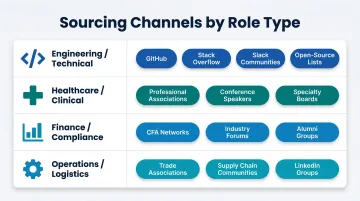
The pattern: passive candidates for specialized roles spend time in communities organized around their craft, not their job search. Prioritize channel quality over size.
Step 3: Build and Search a Qualified Candidate List
With your competency profile and channel map in hand, you're ready to build an actual list.
Start with an outbound sourcing platform that supports multi-filter search by skill, role type, location, and experience — and offers verified profiles to avoid wasting time on fake or AI-generated entries. Obra Hire lets you search 800M+ profiles using competency-based matching. A Must Have / Nice to Have framework controls who enters your pool and how results rank. You can also preview pool size and individual profiles before spending a single contact credit, making it easy to calibrate search criteria without burning budget on a poorly scoped search.
Supplement platform searches with:
- Boolean searches on LinkedIn (particularly for professionals with updated profiles)
- Conference speaker and attendee lists
- Niche community directories and alumni networks
- Employee referral nominations from current team members
No single channel surfaces the entire qualified pool. Multi-source searching consistently identifies candidates who don't appear elsewhere.
Step 4: Craft Personalized, Low-Friction Outreach
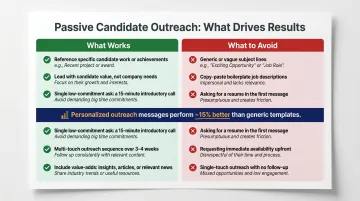
Personalized InMails perform approximately 15% better than bulk messages — and messages under 400 characters achieve response rates 22% above average. Shorter and more specific outperforms longer and generic.
What effective first-touch outreach includes:
- A specific reference to the candidate's actual work (a project, publication, or role detail)
- A clear description of what the opportunity offers them — not what you need
- A single, low-commitment ask: a 15-minute exploratory call, not a resume submission
What to avoid:
- Generic subject lines ("Exciting opportunity for you")
- Boilerplate job descriptions pasted into the message body
- Any ask for references, formal applications, or detailed availability upfront
Plan a multi-touch sequence across 3–4 weeks. Each follow-up should add something — a relevant industry article, a data point about the role, a question about their work. Repeating the original ask without adding value reads as desperation.
Step 5: Nurture Relationships and Track Engagement Signals
Most passive candidates won't respond to the first message. 42% of all candidate replies come from a follow-up message, not the initial outreach. A non-response isn't a no.
Use a CRM or your ATS to log every interaction, record what candidates have shared about their goals, and schedule future touchpoints. Obra Hire includes built-in pipeline tracking with team collaboration — you can add candidates to shared projects, assign collaborators, and track outreach status per candidate without switching tools.
Behavioral signals worth watching:
- LinkedIn profile updates or new skills added
- New publications, speaking engagements, or conference registrations
- Company announcements suggesting instability or change (layoffs, leadership shifts, reorgs)
- Engagement with your content or company page
These signals indicate candidates who may now be more open to a conversation than they were at first contact.
Step 6: Move Interested Candidates Through a Low-Friction Process
When a passive candidate responds, resist the urge to pitch immediately. Spend the first conversation asking questions about their goals, frustrations, and career trajectory. Their answers let you frame the opportunity around what they actually care about. That specificity is far more persuasive than a standard role description.
Keep the path from first conversation to formal interest short:
- Exploratory call — candidate-led, focused on their goals
- Role framing — position the opportunity using their stated priorities
- Introduction to hiring manager — early in the process, not after multiple screening rounds
- Transparent timeline — tell them exactly what comes next and when
Slow, bureaucratic processes send a clear signal to passive candidates: this organization isn't worth leaving a stable job for. How you hire is part of what you're selling.
When Should You Prioritize Passive Candidate Sourcing?
Passive sourcing isn't always the right starting point. For roles where qualified active applicants are available and time-to-fill is the primary constraint, an active pipeline is faster and cheaper.
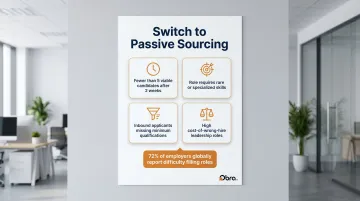
Shift to passive sourcing when:
- The active pool turns up fewer than five viable candidates after two weeks of posting
- The role requires rare or highly specialized skills: AI/ML development, clinical specialties, niche finance, or operations leadership
- Inbound applications are coming in but none clear minimum qualifications
- The cost of a wrong hire is high — leadership roles where fit matters more than speed
The ManpowerGroup 2026 Global Talent Shortage Survey found 72% of employers globally report difficulty filling roles, with the hardest-to-find skills including AI/ML development, engineering, and IT/data. For those skill categories, waiting on inbound applications isn't a viable strategy — outbound sourcing is the only reliable path forward. If two weeks of active posting produces fewer than five qualified candidates, it's time to go outbound.
What You Need Before You Start Sourcing Passive Candidates
Platform and Tool Requirements
You need access to an outbound-capable candidate database — not a job board. The platform should support:
- Multi-filter search by skill, role type, location, and experience level
- Competency-based matching (not just keyword parsing)
- Verified profile filtering to reduce fake or AI-generated entries
- Preview functionality so you can validate pool quality before spending credits
Obra Hire's free tier includes unlimited searches, 1,000 profile views, and 50 contact credits per month — enough to test the workflow and validate your search criteria before committing to a paid plan.
Candidate Profile Readiness
Before searching, you need a competency-based ideal candidate profile, not just a job description. This means:
- Specific skills with proficiency levels
- Must-have vs. nice-to-have criteria clearly separated
- Industry or company background context where relevant
- A clear sense of what "passive-but-persuadable" looks like for this particular role
A vague profile floods your pipeline with low-relevance candidates and outreach that lands flat. The tighter your profile, the smaller and more targeted your pool — and the more your messages will resonate with the right people.
Getting your profile right is only half the prep. The other half is how your team operates once outreach starts.
Recruiter Readiness
Passive sourcing requires a different operating mode. Teams that treat every contact as an immediate fill burn relationships quickly.
You need tolerance for:
- Multi-touch sequences over 3–4 weeks (or months for relationship-based pipeline candidates)
- Conversations that don't convert immediately
- CRM discipline: logging notes, scheduling follow-ups, and tracking candidate signals over weeks or months
Key Variables That Affect Your Passive Sourcing Results
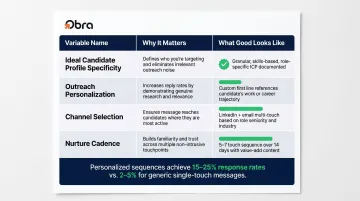
Two teams using the same platform and targeting the same role type can get dramatically different outcomes. These four variables drive most of the difference.
| Variable | Why It Matters | What Good Looks Like |
|---|---|---|
| Ideal Candidate Profile Specificity | Vague profiles produce large, low-relevance lists and generic outreach | Competency-level criteria with Must Have / Nice to Have separation |
| Outreach Personalization | Passive candidates filter generic messages immediately; personalized InMails perform ~15% better than bulk sends | References specific work, leads with candidate value, short and direct |
| Channel Selection | LinkedIn alone caps your reachable pool to those with active, updated profiles | At least 2–3 channels: platform database + LinkedIn + niche community |
| Nurture Cadence | Most candidates aren't ready at first contact; structured follow-up sequences convert at higher rates than ad hoc outreach | CRM-tracked touchpoints over 3–4 weeks with value-added follow-ups |
The biggest leverage point is outreach quality. Persistent, personalized sequences achieve response rates of 15–25%, compared to 2–5% for single-touch generic messages. Getting these variables right — especially outreach quality and nurture cadence — is what separates a full pipeline from a stalled one.
Common Mistakes When Sourcing Passive Candidates for Hard-to-Fill Roles
Most sourcing failures come down to the same repeatable errors. Recognizing them is the first step to fixing them:
- Waiting until the role opens. Proactive hiring fills roles approximately 40% faster and cuts hiring costs by roughly 30% compared to reactive sourcing. For hard-to-fill positions, pipeline building should start before the requisition exists.
- Sending generic outreach. Passive candidates spot templated messages immediately. Generic subject lines and copy-pasted job descriptions generate near-zero responses. Personalized, research-backed outreach — even at modest volume — consistently outperforms blasting.
- Asking for too much, too soon. Requesting a resume or lengthy application in the first message kills engagement. The only first-contact goal is a 15-minute conversation. Remove every barrier between that message and that call.
- Searching only on LinkedIn. LinkedIn limits your pool to professionals with active, updated profiles. The candidates with the exact skills you need may be more visible on niche platforms, community forums, or outbound databases with verified multi-source profiles.
- Giving up after one non-response. Only 10% of recruiters attempt a third contact — yet 95% of successful closes happen between the third and twelfth touch. One unanswered message is noise, not disinterest. Multi-touch sequences surface candidates who missed or weren't ready for the first outreach.
Avoiding these mistakes won't guarantee a fast hire, but committing them almost guarantees a slow one. The sections below cover what to do instead.
Frequently Asked Questions
What is the best way to source passive candidates for hard-to-fill positions?
The most effective approach combines an outbound-capable sourcing platform with competency-based search criteria, personalized multi-touch outreach, and ongoing relationship nurturing. Start pipeline building before roles become urgent — reactive sourcing from zero consistently extends time-to-fill for specialized positions.
What makes a position "hard-to-fill" and how does that change the sourcing approach?
Hard-to-fill positions have small active candidate pools due to highly specialized skills, limited geographic availability, or niche industry experience requirements. These characteristics make passive sourcing the primary strategy, since most qualified candidates are already employed and won't be found through inbound applications.
How do you approach a passive candidate for the first time without being ignored?
Reference something specific to their actual work in the subject line or opening sentence, lead with what the opportunity offers them, and ask only for a brief exploratory call. Short, candidate-centric first messages that clearly reference the person's background significantly outperform generic recruiting templates.
How long does passive candidate sourcing typically take to produce results?
Expect four to eight weeks from first contact to hire for candidates ready to move, and several months for pipeline-stage relationships. Pre-built talent pools dramatically cut that timeline — one Fortune 500 team reduced fill time from 212 days to 48 days using a proactive pipeline.
Should you prioritize employee referrals or direct outreach for hard-to-fill passive roles?
Both work, but for different purposes. Employee referrals produce high-trust, high-conversion candidates but are limited by your current team's network. Direct outbound sourcing through a candidate database scales reach significantly and surfaces candidates outside your existing connections. Use both.
How do you keep passive candidates engaged when they're not ready to move immediately?
Maintain light-touch, relevant contact over time — share industry content, acknowledge career milestones, and avoid repeated asks until timing changes. A CRM or ATS with follow-up reminders keeps promising relationships warm until the candidate is ready to move.