Most companies respond to it with retention programs: better benefits, manager training, engagement surveys. Those matter, but they're downstream fixes. The problem often starts much earlier — at the hire itself.
Talent acquisition platforms are evaluated primarily on speed-to-fill or cost-per-hire. But their most underappreciated contribution is to the quality and fit of hires — which determines who actually stays. This article explains the specific mechanisms that make the difference.
TL;DR
- Talent acquisition platforms reduce turnover by improving candidate-role match before the offer is made
- Competency-based matching, proactive outbound sourcing, and hiring analytics are the three primary mechanisms
- 42% of voluntary turnover is preventable — and most of it traces back to hiring decisions, not management failures
- Poor hiring decisions compound: each misfit hire increases team strain and triggers further departures
- The ROI compounds too: fewer replacements free up budget for smarter, more stable hiring over time
What Is a Talent Acquisition Platform?
A talent acquisition platform is purpose-built infrastructure for identifying, evaluating, and engaging candidates. It goes well beyond what a basic ATS or job board provides.
Where an ATS tracks workflow (applications received, stages completed, offers sent), a talent acquisition platform shapes who enters the funnel and how they're evaluated. That distinction matters enormously for retention, because turnover problems almost always originate in sourcing and selection — not in the tracking of those steps.
SHRM and Gartner both describe modern talent acquisition as covering a broader scope than most hiring teams realize:
- Workforce planning and talent sourcing
- Employer branding and candidate experience
- Internal mobility and succession planning
- Selection tools and workforce analytics
The platform itself isn't the goal. Consistently hiring well-matched people is — and that match quality is what drives retention. A platform is what makes that repeatable across every open role, every hiring manager, and every quarter.
Key Advantages of Talent Acquisition Platforms for Reducing Turnover
Each of the three advantages below addresses a specific, documented root cause of early and mid-tenure attrition. They're operational improvements with measurable effects on who stays and who leaves — not theoretical product claims.
Advantage 1: Competency-Based Matching Reduces Misfit Hires
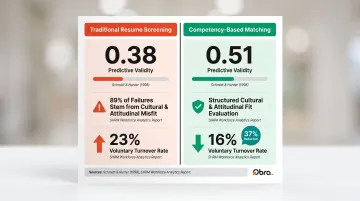
One of the most consistent findings in hiring research is also the most counterintuitive: most new hire failures aren't caused by missing skills. A Leadership IQ study found that 46% of new hires fail within 18 months — and 89% of those failures trace to attitudinal or cultural fit issues, not technical deficiency.
Meanwhile, roughly 30% of new hires leave within their first 90 days. When you combine early attrition with the cost of replacement, misfit hiring becomes one of the most expensive and avoidable problems in talent acquisition.
How competency-based matching addresses this:
Traditional resume screening matches text to text — keywords against job descriptions. A talent acquisition platform using structured competency matching evaluates candidates against defined skill requirements and proficiency levels. Obra Hire, for example, uses a competency-based matching system that distinguishes between "Must Have" criteria (which control who enters the candidate pool) and "Nice to Have" criteria (which rank qualified candidates by strength of fit). This two-tier structure filters on essential qualifications first, then sorts by alignment — so the strongest fits surface, not just whoever applied.
The evidence for this approach is strong. Schmidt and Hunter's landmark meta-analysis found structured interviews have a predictive validity of 0.51 versus 0.38 for unstructured interviews. A Duke University study implementing a competency-based job framework saw voluntary turnover drop from 23% to 16% — a 37% reduction.
KPIs most affected:
- First-year retention rate
- Quality-of-hire score
- Time-to-productivity
- Hiring manager satisfaction with new hires
When it matters most: Roles with complex or precise skill requirements, senior and specialized positions where the cost of a bad hire is high, and organizations scaling quickly where repeated rehires create compounding costs.
Advantage 2: Proactive Outbound Sourcing Builds Pipelines of Genuinely Aligned Candidates
Traditional inbound hiring — posting a job and waiting — doesn't just limit your reach. It shapes the type of candidate who enters your funnel. Active job seekers apply broadly, often out of urgency rather than genuine interest in the role.
That motivation gap has a predictable result: early turnover.
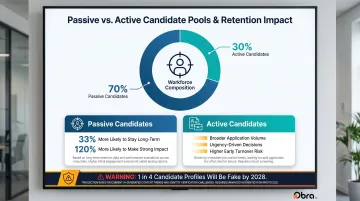
The math on passive talent is striking. Approximately **70% of the global workforce consists of passive candidates** who aren't actively seeking new roles. LinkedIn data indicates passive candidates are 33% more likely to stay long-term and 120% more likely to make a strong impact once they join.
Why outbound sourcing changes the retention equation:
When a recruiter identifies and contacts a candidate based on a strong competency match, two things happen. First, the candidate pool is pre-filtered to people who actually fit the role — not whoever happened to apply this week. Second, passive candidates who respond and accept offers have made a deliberate, considered decision to join, which correlates with higher commitment and longer tenure.
Obra Hire is built around this model. Rather than waiting for applications, recruiters search across 800M+ profiles using AI-powered, competency-based matching, then unlock contact details for the candidates worth pursuing. The platform's candidate pool preview lets teams validate their search criteria before spending any credits, so the outbound effort stays focused from the start.
There's also a signal quality problem with inbound hiring that's getting worse. Gartner predicts that by 2028, one in four candidate profiles worldwide will be fake, and 39% of candidates already report using AI to generate application materials. Outbound sourcing from a verified profile database cuts through that noise — you're reaching real candidates, not filtering out fabricated ones.
KPIs most affected:
- Offer acceptance rate
- 90-day retention rate
- Cost-per-hire (less wasted spend on poor-fit hires)
- Hiring funnel conversion rates
When it matters most: Competitive talent markets where the best candidates aren't actively applying, high-volume roles with chronic turnover patterns, and organizations that have been relying on job boards and seeing the same attrition repeat.
Advantage 3: Hiring Analytics Create a Feedback Loop Between Recruiting Decisions and Retention Outcomes
Without data, organizations repeat the same hiring mistakes — not because they're careless, but because they can't trace turnover back to its origin in the recruitment process. The problem looks like a management issue or a culture issue when it's actually a sourcing or selection issue.
It's more common than most expect. Only 20% of companies currently track quality-of-hire metrics, and 68% of organizations are reportedly tracking the wrong recruitment metrics altogether — prioritizing speed and cost over retention-relevant signals.
What the data actually reveals:
Source-of-hire is one of the clearest examples. Referred candidates show a 46% one-year retention rate versus 33% for career site hires. At four years, 45% of referral hires remain compared to just 20% of job board hires. That's not a small difference — it's a structural one. Organizations that can see this pattern in their own data can redirect sourcing investment accordingly.
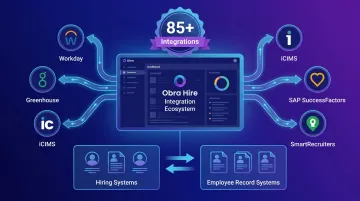
Talent acquisition platforms that integrate with HRIS and ATS systems create the feedback loop that makes this analysis possible. Obra Hire supports 85+ integrations — including Workday, Greenhouse, iCIMS, SAP SuccessFactors, and SmartRecruiters — so hiring data flows directly into the employee record. When HR and TA leaders can connect sourcing channel to tenure, or candidate score to first-year performance, they can make process changes based on evidence rather than instinct.
KPIs most affected:
- Quality-of-hire over time
- Source-of-hire retention rates
- Average tenure by hiring channel
- Recruiter efficiency
- Cost-per-retained-employee
When it matters most: Organizations experiencing chronic or high-volume turnover, those undergoing rapid growth, and those where leadership requires data justification for TA investment decisions.
What Happens When Reactive Hiring Replaces Strategic Talent Acquisition
The alternative to structured talent acquisition has a recognizable pattern: a role opens, pressure mounts, and the goal shifts from "hire well" to "hire fast." Under those conditions, the hiring process collapses into whatever fills open roles fastest — unvetted inbound applicants, job board blasts, agency placements at 15-30% of first-year salary.
Those effects compound quickly:
- Misfit hires disengage quickly — they either can't meet performance expectations or find the work unsatisfying. They leave, and the cycle restarts.
- No visibility into why hires fail — without sourcing and selection data, it's impossible to identify whether the problem is the job description, the interview process, the sourcing channel, or something else.
- Rising cost-per-hire — urgency drives teams toward expensive channels. SHRM benchmarks the average cost-per-hire at nearly $4,700, but agencies and premium sourcing push that number significantly higher.
- Scale multiplies the problem — as headcount needs grow, a broken hiring process doesn't stay contained. The same turnover rate applied to a larger workforce means more departures, more replacements, and more team disruption at exactly the moment stability matters most.
A peer-reviewed PMC study documented this feedback loop directly: staff in high-turnover environments reported higher job demands and lower organizational support — conditions that push remaining employees closer to the exit. Without a structured hiring approach, each departure makes the next one more likely.
How to Get the Most Value from a Talent Acquisition Platform
A platform's impact on retention compounds when it's used consistently and connected to post-hire data — not just deployed for individual urgent searches. The organizations that see the strongest results set up competency profiles before they start searching, not after the first round of interviews.
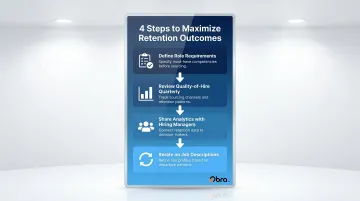
Practical steps that drive retention outcomes:
- Define role requirements before sourcing — use the platform's competency matching capabilities to specify must-have skills and experience levels upfront, so the candidate pool is filtered correctly from the first search
- Review quality-of-hire data quarterly — track which sourcing channels, candidate profiles, and hiring patterns are producing employees who stay and perform
- Share sourcing analytics with hiring managers — retention data is most useful when it reaches the people making final decisions
- Iterate on job descriptions based on outcomes — if a particular role profile consistently produces early departures, the problem is often in how the role was defined, not just who was selected
These steps only produce a real feedback loop if hiring data flows automatically into post-hire systems. Obra Hire's 85+ pre-built integrations — including Workday, Greenhouse, and iCIMS — ensure candidate records sync into the employee file without manual duplication, which is what makes source-of-hire retention analysis actionable rather than theoretical.
The practical takeaway: consistent use plus integrated data beats occasional use of a powerful tool. Set the competency benchmarks, close the feedback loop with post-hire data, and the platform will surface patterns that most reactive hiring processes never catch.
Conclusion
Turnover is largely a hiring problem before it becomes a management problem. Talent acquisition platforms address it at the source: they improve match quality before offers are made, reach candidates who are genuinely aligned rather than urgently available, and surface data visibility into what's actually working.
The advantages compound. Each better hire raises the performance baseline, reduces replacement costs, and produces retention data that makes the next round of hiring more precise. The organizations furthest ahead on turnover treat talent acquisition as an ongoing practice. That discipline — applied consistently across sourcing, matching, and measurement — is what separates teams that rehire the same roles every year from those that don't.
Frequently Asked Questions
What is the best way to reduce employee turnover through talent acquisition?
The highest-impact approach combines competency-based candidate matching, proactive outbound sourcing to reach well-aligned candidates, and post-hire analytics that identify which hiring patterns are producing early leavers. Each element targets a different root cause of attrition — addressing fit, pipeline quality, and continuous improvement in one connected process.
Is 42% of employee turnover preventable?
Yes. Gallup's 2024 study of over 700 departing employees found that 42% said their manager or organization could have prevented their departure. Work Institute places the figure higher at 75%+, counting all turnover reasons that fall into addressable categories — most of which trace back to role misfit and poor hiring decisions.
What features should I look for in a talent acquisition platform to reduce turnover?
Prioritize competency-based matching, verified candidate filtering, sourcing reach beyond inbound applicants, and analytics that connect hiring decisions to retention outcomes. These features directly address the most common root causes of early attrition rather than just optimizing for fill speed.
How does competency-based matching reduce employee turnover?
It ensures candidates have both the skills and the working style the role actually requires — not just the right keywords on a resume. Since 89% of new hire failures trace to attitudinal and fit issues rather than technical gaps, verified competency matching reduces the disengagement that drives early departures.
What is the difference between talent acquisition and recruiting in the context of retention?
Recruiting is reactive: fill the open role as fast as possible. Strategic talent acquisition is proactive: build pipelines of well-matched candidates using workforce planning, competency-based selection, and retention analytics. Because fit-based selection replaces urgency-driven selection, the proactive approach consistently produces better retention outcomes.
How quickly can a talent acquisition platform impact turnover rates?
Some metrics improve within the first few hiring cycles — offer acceptance quality and 90-day retention often show early movement. Broader turnover reduction typically becomes measurable over 6-12 months as better hires move through their first year and the data picture becomes clearer.