Introduction
Most recruiters know this frustration well: hundreds of applications come in, the majority are wildly off-target, and the candidate who would have been perfect never applied at all. The average U.S. job posting now receives roughly 250 resumes — and between 75% and 88% of those applicants are unqualified for the role. Meanwhile, 70% of the global workforce consists of passive talent who aren't actively job searching.
AI candidate matching was built to fix both sides of that problem. It screens inbound volume intelligently and proactively surfaces passive candidates who fit — without waiting for them to apply.
That shift is happening quickly. According to SHRM's 2025 research, 64% of organizations using AI in HR apply it specifically to recruiting, interviewing, or hiring — making talent acquisition the leading use case for HR AI overall.
This guide breaks down how AI candidate matching actually works — how match scores are generated, what signals systems evaluate, and where the real limitations are.
TL;DR
- Candidate matching AI uses NLP and competency-based scoring to rank candidates by genuine fit, not keyword overlap
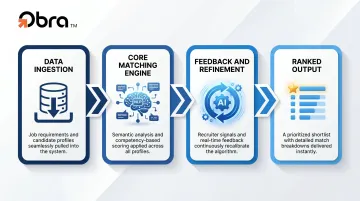
- The process follows a defined sequence: ingest data → apply matching logic → score candidates → deliver ranked output
- Scoring factors include hard skills, career trajectory, experience context, and behavioral signals
- Matching works both inbound (screening applicants) and outbound (discovering passive candidates)
- Bias and fake profiles are real limitations — responsible platforms counter them with verified filtering, structured taxonomies, and human review
What Is AI Candidate Matching?
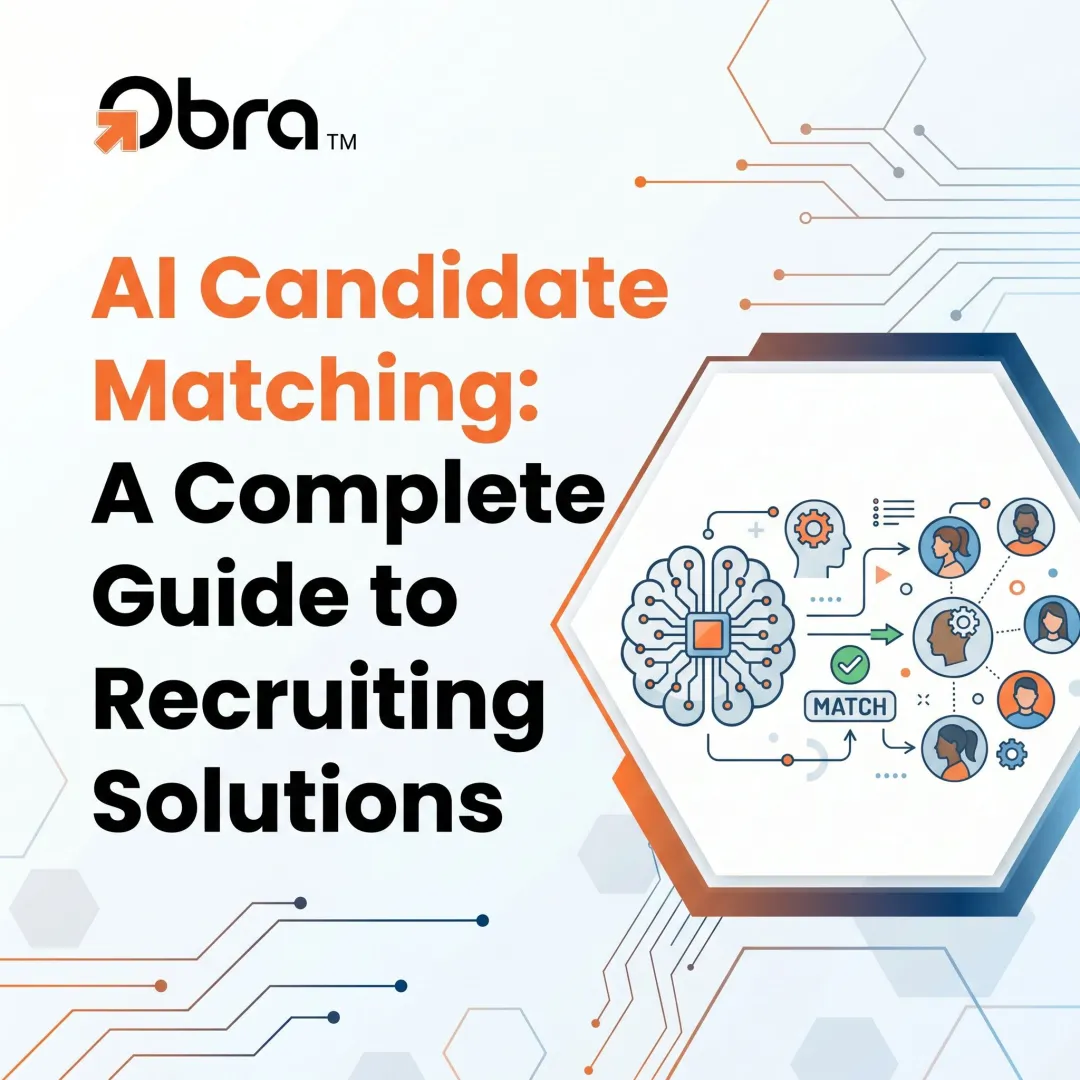
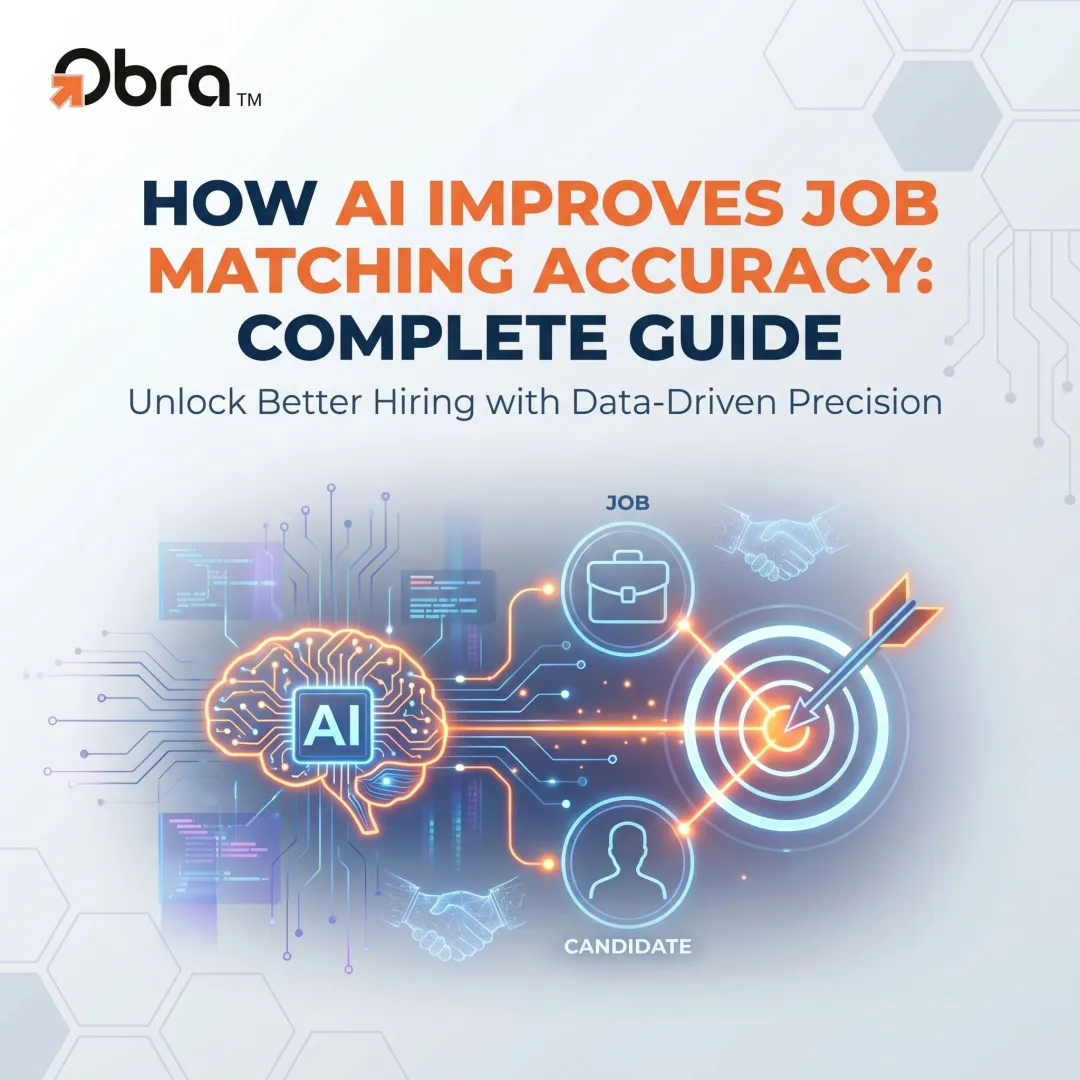
AI candidate matching is the automated process of comparing candidate profiles against job requirements to determine compatibility — replacing manual review with algorithmic scoring at scale.
That's a meaningfully different thing from basic keyword filtering — and the gap matters more than most hiring teams realize:
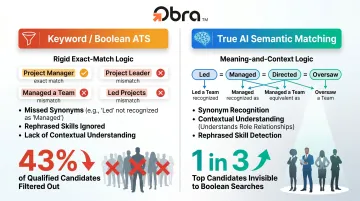
| Approach | How It Works | What It Misses |
|---|---|---|
| Keyword/Boolean ATS | Scans for exact term matches | Synonyms, rephrased skills, context |
| True AI Matching | Understands meaning and context | Far less — recognizes equivalent phrases |
Many platforms label themselves "AI" while still running keyword logic underneath. That distinction matters in practice. A GoPerfect Labs study of 500 real recruiting searches found that 1 in 3 of the highest-scoring semantic AI results were completely invisible to equivalent Boolean keyword searches. An estimated 43% of qualified applicants disappear in the "ATS graveyard" because keyword-based filters fail to recognize their qualifications.
Inbound vs. Outbound Matching
AI matching operates in two paradigms:
- Inbound matching — screening and ranking candidates who apply to open roles
- Outbound matching — proactively searching a large candidate database to find passive candidates who fit, before they ever apply
Inbound-only approaches leave most qualified talent untouched. Since 70% of the workforce isn't actively applying, platforms like Obra Hire are built around outbound-first architecture — searching 800M+ profiles to find candidates who match your criteria, even if they've never seen the job posting.
That outbound capability is only as good as the matching engine powering it. AI systems vary widely — from simple scoring models to transformer-based semantic engines — and that gap in sophistication is exactly what separates platforms that surface the right candidates from those that just return the most keyword-dense resumes.
How Does AI Match Candidates to Jobs?
AI candidate matching follows a defined sequence. Each stage processes specific inputs and feeds into the next, ultimately producing a ranked shortlist of qualified candidates.
Data Ingestion
The process starts with ingestion: the AI pulls structured and unstructured data from both sides of the match.
From the job side:
- Job title, required skills, experience levels, industry context
- Must-have qualifications vs. nice-to-haves
- Role scope and seniority signals from the job description text
From the candidate side:
- Resume text, work history, job titles, employment dates
- Certifications, education, skills declarations
- Activity signals (recency, platform engagement)
In Obra Hire, a recruiter can trigger this by typing a natural language description, pasting a job description, or setting manual filters. The quality of input data at this stage shapes everything downstream — garbage in, garbage out.
Core Matching Engine
Instead of scanning for exact keyword overlap, AI matching uses Natural Language Processing (NLP) and semantic analysis to understand meaning. The system recognizes that "led cross-functional initiatives" and "project management" describe related capabilities even without shared vocabulary.
Competency-based matching takes this further. Rather than treating each term as an isolated keyword, the system maps candidate skills against a structured taxonomy — assigning proficiency levels and connecting related skills. Obra Hire's approach uses structured competency data to evaluate "Must Haves" (which determine which candidates enter the pool) and "Nice to Haves" (which rank qualified candidates so the strongest matches rise to the top).
Each result shows a transparent breakdown of where a candidate matches or falls short.
The system generates match scores from weighted criteria and ranks candidates accordingly.
Feedback and Refinement
Better AI matching systems incorporate recruiter behavior into how they weight signals over time. Every accept, pass, or reject decision can feed back into the algorithm, recalibrating what "good fit" means for that role or team.
A static model that doesn't learn from recruiter feedback will drift in accuracy as job requirements and team preferences evolve. Obra Hire's "Find Similar Candidate" feature reflects this principle — once a recruiter identifies a strong match, the system surfaces additional candidates with comparable skills and backgrounds.
Ranked Output
The process produces a prioritized shortlist with surfaced skills, match criteria breakdowns, and full profile details. When a recruiter reveals a candidate using contact credits, they unlock email, phone, LinkedIn, and resume — delivered directly into existing workflows.
Obra Hire integrates with 85+ ATS and HRIS platforms — including Workday, Greenhouse, iCIMS, Lever, and SAP SuccessFactors. Ranked results push directly into existing pipelines without disrupting current processes. The operational impact is measurable: according to LinkedIn's Future of Recruiting 2025 report, companies whose recruiters use AI-assisted tools are 9% more likely to make a quality hire compared to those who don't.
What Signals Does AI Use to Evaluate Candidate Fit?
Hard Skills and Experience Signals
Job titles, years of relevant experience, technical certifications, and industry background form the foundational layer. AI reads these in context — a "Staff Accountant at a Big Four firm" implies specific proficiency levels without needing every skill listed explicitly. The system infers competency from role context, not just declared keywords.
Career Trajectory Signals
AI infers progression patterns: promotions, scope expansions, lateral moves into adjacent functions. This helps predict whether a candidate is at the right level for the role — and likely to grow into it. A candidate who has consistently expanded responsibility over five years reads differently than someone at the same title who has stayed flat.
Behavioral and Soft Skill Signals
Some systems extract communication style, leadership language, and collaboration patterns from unstructured text — cover letters, profile summaries, or assessment responses. This capability is real but uneven across platforms; accuracy varies significantly, and only 37% of job seekers currently trust AI to accurately reflect their qualifications in this dimension.
Profile Verification Signals
Gartner predicts that by 2028, 1 in 4 candidate profiles worldwide will be fake, and current reports suggest up to 40% of candidate pipelines may already contain fraudulent applications. AI-generated resumes now pollute many talent databases, creating false positives in match results.
Responsible platforms filter for verified profiles before surfacing them. Obra Hire's Verified Profile Filtering (available on Explore and Scale plans) surfaces only verified candidates, keeping fake and AI-generated profiles from skewing your results entirely. The signal quality of any match is only as reliable as the profiles behind it.
Benefits and Limitations of AI Candidate Matching
What AI Matching Does Well
The core operational benefits are substantial:
- Screens thousands of profiles in seconds vs. 23 hours of manual screening per hire
- Searches databases of hundreds of millions of candidates simultaneously
- Applies identical criteria every time, without fatigue or mood variation
- Surfaces qualified candidates that title-based or keyword searches miss entirely
AI matching applies across the hiring workflow — most powerfully at the sourcing stage (finding passive candidates) and screening stage (ranking inbound applicants). AI matching works best as a sourcing and prioritization layer, not as an autonomous decision-maker. Obra Hire's platform is built around this principle — the system surfaces and ranks candidates, but employers remain solely responsible for all hiring decisions.
Where AI Matching Falls Short
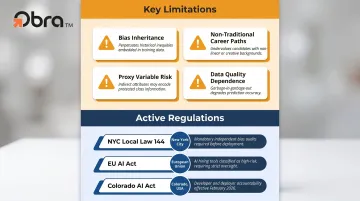
These limitations are real and worth understanding before deployment:
- Bias inheritance — models trained on historical data can perpetuate past hiring patterns. A University of Washington study found that when AI systems exhibited racial bias in resume recommendations, human evaluators adopted similar patterns
- Non-traditional career paths — unconventional resumes (career changers, self-taught professionals, gaps) can score poorly even when the candidate is genuinely qualified
- Proxy variable risk — models can learn to favor characteristics correlated with protected categories without explicitly using them
- Data quality dependence — match accuracy is only as good as the underlying candidate data
Regulatory requirements are now active in multiple jurisdictions:
- NYC Local Law 144 — requires independent bias audits of automated hiring tools
- EU AI Act — classifies employment AI as high-risk
- Colorado AI Act — took effect February 2026
Well-designed systems address these risks through structured taxonomies, input anonymization, and regular audits. Employers remain liable under EEOC guidance regardless of whether the technology was built in-house or by a third party.
Conclusion
AI candidate matching transforms what was an unstructured, labor-intensive process into a systematic one: ingest data from job requirements and candidate profiles, apply semantic and competency-based matching logic, and deliver ranked candidates that reflect actual job fit rather than superficial keyword overlap.
Knowing how these systems work gives recruiting teams a real advantage when evaluating tools. Not every AI recruiting tool is built the same way. The gaps that matter most:
- Semantic matching vs. Boolean filters dressed up in AI language
- Verified profile databases vs. pools polluted with fake or AI-generated candidates
- Outbound-first architecture vs. platforms retrofitted onto an inbound application model
Those gaps show up in the quality of candidates you actually hire — not in the marketing copy. Obra Hire's approach — competency-based matching across 800M+ verified profiles, built specifically for outbound sourcing — is designed around exactly these distinctions. Use this guide to ask sharper questions when evaluating any platform you consider.
Frequently Asked Questions
What is AI candidate matching?
AI candidate matching is the automated process of comparing candidate profiles to job requirements using NLP, semantic analysis, and skills-based scoring — ranking candidates by actual compatibility rather than keyword overlap. It replaces manual review with algorithmic evaluation at scale.
How accurate is AI candidate matching?
Accuracy depends heavily on the underlying approach. Boolean/keyword systems lose roughly 43% of qualified applicants in filtering, while BERT-based semantic architectures have demonstrated 92.3% accuracy in academic benchmarks (ACM, 2025). Data quality and the system's learning mechanisms also directly affect real-world results.
Can AI candidate matching reduce hiring bias?
AI can reduce bias by applying criteria consistently and anonymizing demographic inputs — but it can inherit bias from historical training data. Responsible platforms audit regularly, use structured competency taxonomies, and strip protected characteristics from matching inputs. Regulatory audits are now legally required in several jurisdictions.
What's the difference between AI candidate matching and keyword-based ATS filtering?
Keyword-based ATS filtering looks for exact term overlap — if the vocabulary doesn't match, the candidate disappears. AI matching understands context, recognizing that two phrases can describe the same skill even without shared words. That gap directly determines how many qualified candidates appear in results versus get screened out.
How do employers use AI to find passive candidates?
Outbound AI matching tools scan large pre-existing candidate databases to proactively identify passive candidates who match open roles. Platforms like Obra Hire search 800M+ profiles against open role criteria, giving employers access to talent that would never appear in an inbound application pool.
What data does AI use to match candidates to jobs?
Primary inputs include job title and description, required skills and certifications, years of experience, and career progression history. Advanced systems also incorporate behavioral signals and trajectory inference, comparing these against the job's structured requirements — weighted by must-have vs. nice-to-have criteria — to generate a match score.