The consequences extend beyond wasted budget. A poor platform choice affects time-to-fill, hiring quality, and recruiter capacity simultaneously. Each of those compounds into measurable business cost over months, not weeks.
This guide gives you a structured framework for evaluating AI recruitment platforms before you commit — anchored to metrics that actually predict ROI, not demo impressions.
TL;DR
- Not all AI recruiting platforms deliver equivalent ROI — architecture (outbound vs. inbound), pricing model, and matching logic vary widely
- The most defensible ROI metrics are unit-level: cost-per-screening, time-to-first-qualified-candidate, and recruiter capacity
- Before buying, assess database quality, integration depth, pricing transparency, and whether you can preview results for free
- Hidden costs like seat fees, integration overhead, and fake applicant volume silently erode ROI if left out of your total cost calculation
- Freemium access, no-contract terms, and verified candidate quality let you measure ROI from week one
What Is an AI Recruitment Platform?
An AI recruitment platform uses artificial intelligence to automate or improve one or more stages of the hiring funnel — from sourcing and screening to outreach and matching.
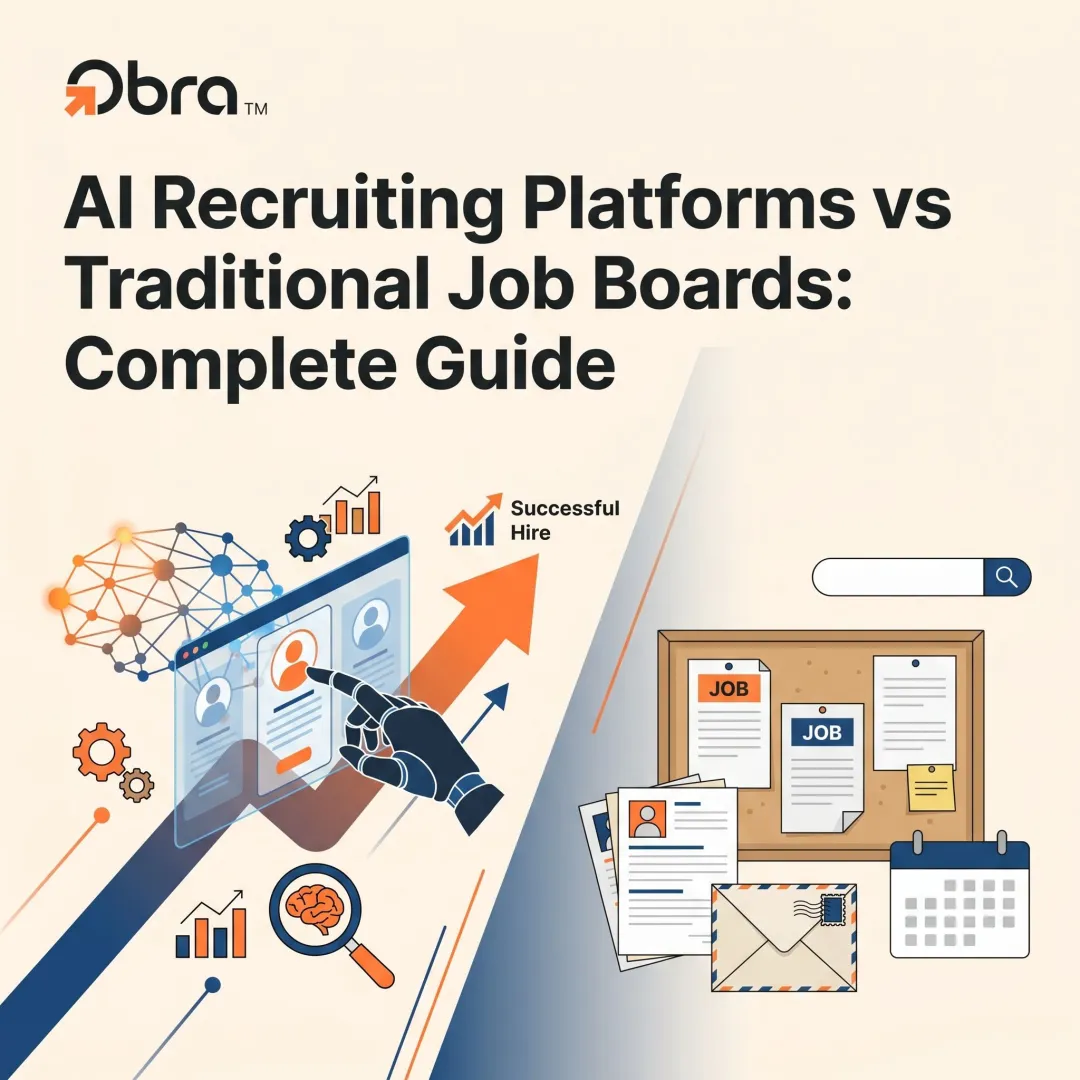
Two dominant architectural models define how these platforms work and what ROI looks like for each:
| Architecture | How It Works | ROI Driver |
|---|---|---|
| Inbound | Processes applicants who apply to your posted jobs | Reduces screening overhead from applicant volume |
| Outbound | Proactively searches a candidate database to surface qualified profiles | Reduces dependency on expensive sourcing channels |
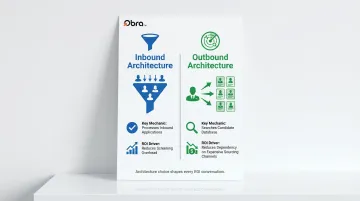
This distinction shapes every ROI conversation. Inbound platform value is bounded by your pipeline quality — and inbound pipelines are increasingly flooded with AI-generated applications. Outbound platform value depends on database quality and sourcing reach.
Core Capabilities to Evaluate
Most AI recruiting platforms claim coverage across the full hiring funnel. In practice, depth varies widely. Six capability categories matter most:
- Candidate sourcing/search: database size, natural language search support, geographic coverage
- Matching and screening logic: whether the platform uses keyword matching or competency-based assessment
- Outreach automation: sequence management, templated messaging, response tracking
- ATS/HRIS integration: read/write depth, supported platforms, sync reliability
- Analytics and reporting — funnel metrics, team usage, pipeline visibility
- Candidate verification — how the platform filters fake or AI-generated profiles
No platform covers all six equally well. Identify which capabilities matter most for your specific hiring model before evaluating features.
The Right Metrics to Track AI Recruiting ROI
Most failed ROI evaluations start with the wrong metrics. "Hires made" introduces too many variables — manager decisions, offer acceptance, counter-offers — to attribute meaningfully to a platform. Start with unit economics instead: the cost and time consumed at a specific, repeatable stage of the funnel.
Cost-Per-Screening and Recruiter Capacity
Cost per completed screening = fully loaded recruiter cost (salary + benefits + overhead) ÷ screenings completed per month.
This isolates a single repeatable unit of work directly attributable to the platform. When AI handles screening documentation, ATS updates, and candidate communication, the same recruiter completes more screenings per month — which either lowers cost-per-screening or frees capacity for higher-value work.
Recruiters spend an average of 23 hours per hire on screening tasks alone, with only 3% of applicants advancing to interview. That screening burden is the largest, most measurable cost pool AI can directly reduce.
To quantify capacity change: track active requisitions per recruiter before and after adoption. A meaningful AI platform should increase this number without increasing time-per-hire.
Time-to-First-Qualified-Candidate
Unlike time-to-fill, this metric measures how quickly a platform surfaces an actionable, verified lead — something directly attributable to the platform itself, not downstream process variables like interview scheduling or offer negotiation.
Baseline it before adoption: Pull ATS data to calculate average days elapsed between job post creation and first interview scheduled. That number becomes your pre-platform benchmark.
Quality of Hire Signals
Downstream quality indicators confirm whether the platform's matching logic is working:
- Submission-to-interview ratio — are surfaced candidates actually interview-ready?
- Interview-to-offer ratio — are interviews converting consistently?
- New hire retention at 90 and 180 days — are hires sticking?
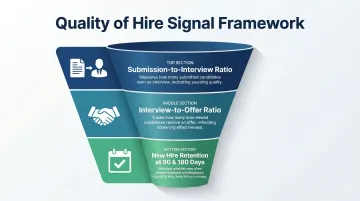
Platforms using competency-based matching produce better signals here than keyword or resume-text approaches. They evaluate demonstrated capability — not how well a candidate writes their resume.
Pipeline Integrity Metrics
Few teams are tracking this yet — but the numbers make a case for starting now. iCIMS data shows 12.5% of applicants use fake identities, and Gem's research puts the probability that a recruiter has already encountered fraudulent applications at 99%.
Time spent filtering fake applicants is a direct, measurable labor cost. Track the percentage of unverifiable or low-quality profiles in your pipeline. If that number is climbing, your inbound-dependent platform is generating hidden overhead — not efficiency.
6 Factors to Evaluate AI Recruitment Platforms for ROI
The wrong platform doesn't just underperform — it creates switching costs, forces manual reconciliation work, and kills recruiter adoption before you see any return. These six factors connect platform features directly to measurable business outcomes.
1. Candidate Database Quality and Verification
Database size determines the platform's ability to reduce dependency on expensive sourcing channels. But size without verification inflates apparent volume without improving pipeline quality.
Questions to ask vendors:
- How many profiles are searchable, and in which geographies?
- What verification methods are applied to profiles?
- Does the platform filter out AI-generated or fake profiles?
Obra Hire, for example, provides access to 800M+ profiles with verified profile filtering available on paid plans — specifically designed to address what Gartner projects will affect 1 in 4 profiles by 2028.
2. Matching Intelligence: Competency-Based vs. Keyword Search
Keyword matching surfaces candidates who write well. Competency-based matching evaluates fit against structured skill proficiency levels — a meaningful difference in interview conversion rates.
The LinkedIn Economic Graph's Skills-First research found that skills-first hiring increases candidate pools by approximately 10x compared to title-based approaches, while also improving diversity outcomes.
ROI-relevant KPIs to benchmark matching quality:
- Submission-to-interview ratio
- Interview loops per hire (fewer = better initial match quality)
3. ATS/HRIS Integration Depth
Integration depth determines actual adoption. A platform that doesn't write outcomes back into your ATS creates manual reconciliation work that negates efficiency gains.
Ask vendors to demonstrate live, bi-directional read/write capabilities with your specific stack. The capabilities that matter most for ROI:
- Stage updates written back to ATS automatically
- Note and scorecard writeback
- Webhook support for real-time data sync
- Native support for your specific ATS (Workday, Greenhouse, iCIMS, Lever, SAP SuccessFactors)
Nearly 1 in 4 HR tech implementations fail to meet adoption expectations — and SHRM identifies change management and integration quality as the leading causes, not technical capability.
4. Pricing Model and Cost Transparency
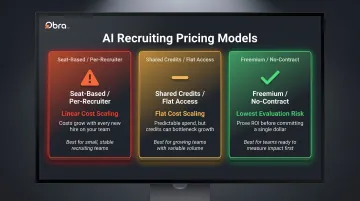
Pricing architecture directly affects your ROI calculation.
| Pricing Model | Risk | Best For |
|---|---|---|
| Seat-based / per-recruiter | Costs scale linearly; fragments team usage | Small, stable teams |
| Shared credits / flat access | Scales at flat cost; eliminates duplicate purchases | Growing teams |
| Freemium / no-contract | Lowest evaluation risk; ROI measurable before spending | Any team evaluating |
Request total cost of ownership estimates, not just license fees. Implementation, integration, and training costs can multiply the apparent license cost significantly. OutSail estimates the average mid-size company wastes 30-40% of its HR tech budget on redundant systems and unused functionality.
5. Outbound vs. Inbound Platform Architecture
For inbound-first platforms, ROI is bounded by your inbound pipeline quality — which is degrading as AI-generated application volume rises. If you're evaluating an outbound platform instead, the relevant metrics shift entirely:
- Sourcing reach (database size, candidate freshness)
- Response rates to outbound outreach
- Reduction in agency spend
Applicant processing volume is an inbound metric. Applying it to an outbound platform will make strong tools look weak.
6. Pre-Purchase Risk Controls and Trial Capabilities
One of the most common evaluation failures is purchasing access to a candidate database that doesn't contain qualified profiles for your specific roles or geographies.
Platforms that let you preview candidate pool size and profile quality before spending credits or signing a contract reduce this risk to near zero. On Obra Hire's free tier, you can run unlimited searches, view full profiles including work history and location, and confirm pool depth — before revealing any contact information or spending a single credit.
If a platform won't show you what's behind the paywall before you commit, that's a signal worth taking seriously.
Hidden Costs That Can Silently Erode AI Recruiting ROI
Hidden Costs That Can Erode AI Recruiting ROI
Most ROI calculations stop at subscription fees — and that's where the real costs get missed.
Seat-Based Pricing and Fragmented Team Usage
Per-recruiter pricing models create structural cost inefficiency as teams grow. The typical failure pattern:
- Headcount increases → costs scale linearly
- Individual recruiter accounts → siloed candidate data
- Duplicate purchases → same candidate contacted twice, credits wasted
- Inconsistent usage → platform ROI becomes impossible to measure
Shared credit models with centralized admin — where all team members draw from a single pooled credit balance — eliminate this problem. Obra Hire's Scale plan offers pooled credits with admin controls, so a contact revealed by one recruiter is visible to the entire team — no duplicate spend, no fragmented data.
The Cost of Fake and AI-Generated Applicants
Inbound application fraud is a labor cost that rarely shows up in ROI models:
- Average corporate posting receives ~250 resumes
- Recruiters spend roughly 7.4 seconds per resume scan
- At that rate, screening 300 resumes consumes 10-15 hours on initial review alone
- Fraud rates for remote technical roles can reach 28% (per a Daxko case study, as reported by Gem)
- Manual fraud verification costs up to $800 per bulk upload for difficult roles
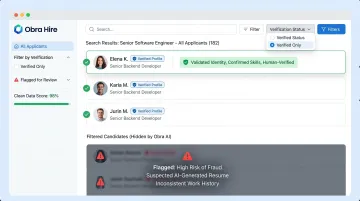
Outbound platforms with verified candidate data eliminate this cost center entirely — you're proactively searching a database rather than processing an inbound queue that includes fraudulent submissions.
How Obra Hire Helps Teams Maximize Recruiting ROI
Obra Hire is an outbound hiring platform that addresses the three ROI problems most teams hit first: high sourcing cost, low candidate quality, and fragmented team usage. Here's how its specific features map to each.
ROI-relevant differentiators:
- Search 800M+ verified profiles from day one, no waiting for inbound applications
- SkillsTree competency-based matching uses 8,241 skills with proficiency levels, going beyond keyword search to evaluate actual fit
- Verified profile filtering (on paid plans) eliminates fake and AI-generated candidates from results
- Preview candidate pool size, work history, location, and skills before spending a single credit
Those features address candidate quality. On the cost and operations side:
- 85+ ATS/HRIS integrations (Workday, Greenhouse, iCIMS, Lever, SAP SuccessFactors) plug directly into existing workflows
- Shared team credits with centralized admin: contacts revealed by one team member are visible to all, cutting duplicate spend
- Freemium model with no contracts: start free and run real searches before committing any budget
Pricing is straightforward: $0/month gets you 1,000 profile views and 50 contact credits. The Explore plan runs $109/month, and Scale is $169/month for teams managing multiple roles simultaneously. Because searches are unlimited on every plan, you can validate candidate pool depth before touching a single credit.
Conclusion
ROI evaluation comes down to four metrics that matter: unit-level sourcing cost, time-to-qualified-candidate, match quality, and total cost of ownership. Everything else is secondary.
The right platform makes measurement straightforward. When hiring volumes or team needs change, revisit the baseline metrics you established at adoption. Clear, consistent movement on those numbers is what separates a platform that delivers from one that doesn't.
Before committing to any tool, verify it can report on:
- Sourcing cost per role — actual spend divided by qualified candidates reached
- Time-to-qualified-candidate — days from search start to first viable contact
- Match quality rate — percentage of outreached candidates who meet role requirements
- Total cost of ownership — subscription, credits, time, and integration overhead combined
Frequently Asked Questions
Frequently Asked Questions
What is a realistic ROI expectation from an AI recruitment platform?
ROI varies by platform type and use case. SHRM benchmarks average cost-per-hire at approximately $4,700, with total costs reaching 3-4x salary when soft costs are included. Always validate vendor-specific figures against your own baseline, not marketing claims.
How long does it typically take to see ROI from an AI recruiting tool?
Operational ROI (screening cost reduction, recruiter time savings) is typically visible within 30-60 days. Downstream quality-of-hire metrics like 90/180-day retention take longer to manifest. Platforms with freemium or no-contract models let you establish a real-world baseline faster without committing budget upfront.
What is the difference between cost-per-hire and cost-per-screening for ROI measurement?
Cost-per-hire captures total recruitment spend divided by hires made: a lagging, multi-variable metric influenced by factors outside the platform's control. Cost-per-screening isolates one repeatable unit of work directly attributable to the platform, making it far easier to model for Finance and attribute to specific tooling decisions.
How do you evaluate an AI recruiting platform before committing budget?
Preview candidate pool quality for your actual open roles, test ATS integration in a live environment, and use a freemium tier to establish a real-world baseline. Any platform requiring a contract before you can assess database quality for your specific roles and geographies is a meaningful evaluation risk.
What hidden costs should teams factor into AI recruiting ROI calculations?
Factor in implementation labor, recruiter training time, per-seat cost at scale, and ongoing effort spent filtering fake or low-quality applicants on platforms without verification. Together, these routinely account for 30-40% of total HR tech spend.
How is ROI measured differently for outbound vs. inbound AI recruiting platforms?
Inbound platform ROI centers on screening efficiency and applicant processing speed. Outbound ROI centers on sourcing reach and agency spend reduction, and it bypasses the AI-generated applicant problem entirely, eliminating a hidden labor cost that inbound-dependent platforms can't address.